The kitchen sink is an unusually revealing piece of design. Unlike many elements of the kitchen, it is encountered constantly and at close range; its proportions, material, depth and placement have a tangible effect on how the room performs. Specifying one well is therefore less about selecting an object and more about understanding a sequence of daily tasks.
Stainless steel remains enduringly relevant because it is resilient, hygienic and visually recessive—qualities that allow stone, timber and cabinetry to take precedence. The gauge, grade and finish of the steel are worth considering, particularly in kitchens expected to withstand intensive use. A softer brushed finish can sit quietly within a restrained palette, while coloured metallic finishes introduce a more deliberate decorative note.
Composite Sinks
Composite sinks offer another proposition altogether. Their dense, stone-like appearance can create a stronger relationship with a benchtop, particularly where tonal continuity is important. Dark composite sinks can recede almost entirely into black or charcoal surfaces, while lighter iterations provide a softer alternative to the reflective quality of steel.
Fireclay Sinks
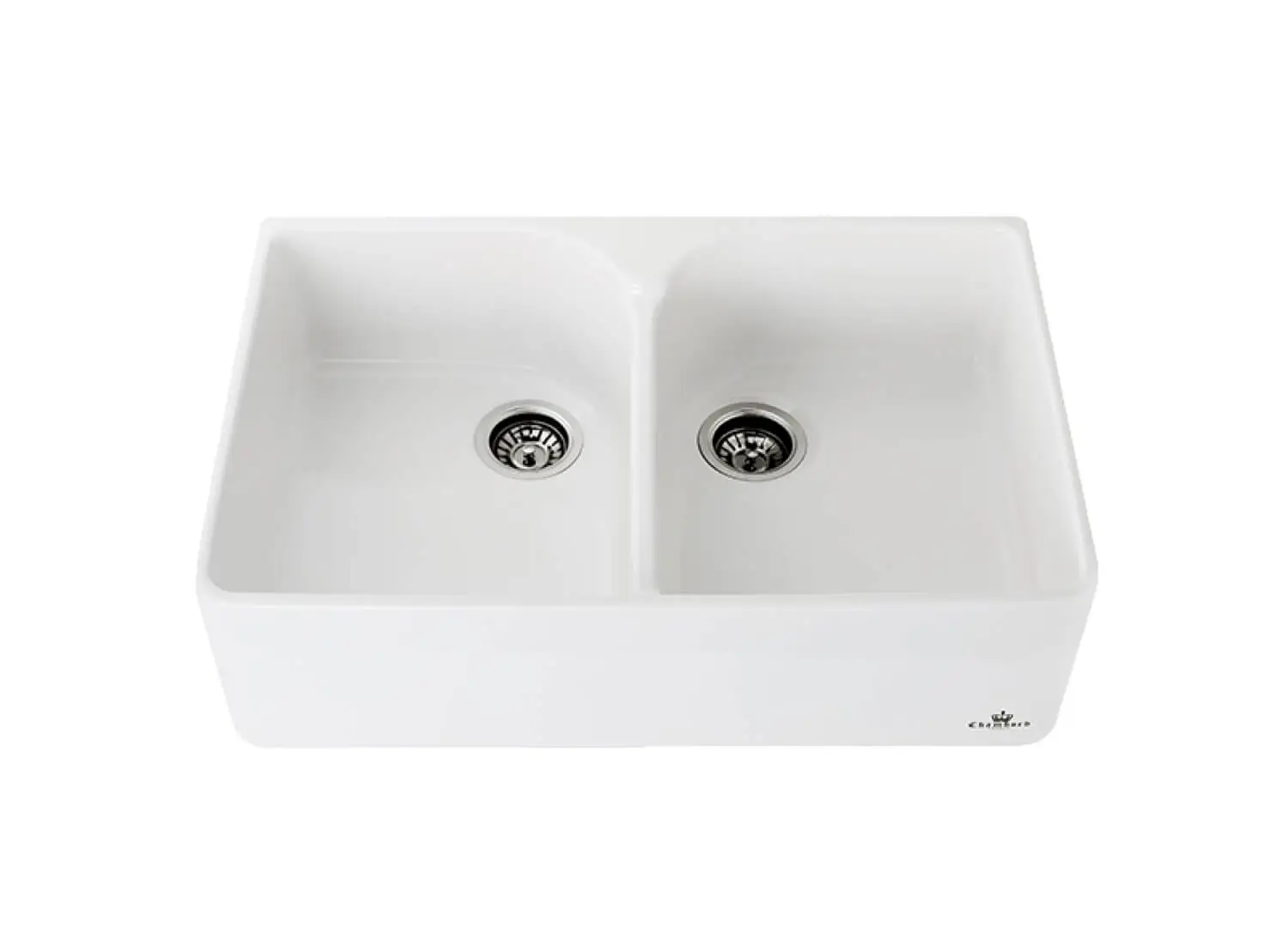
Fireclay—also known as ceramic—carries its own particular character, suited to kitchens where the sink is intended to read as a substantial architectural element.
A Balancing Home by Luigi Rosselli and Decus. Photography by Justin Alexander
Bowl Configuration Should Follow Behaviour Rather Than Convention
Single Bowl Sink
A generous single bowl is often the most flexible choice. Large pans, oven trays and platters fit easily within it, and the simplicity of one uninterrupted volume suits kitchens where preparation and washing are streamlined.
Double Bowl Sink
A double bowl provides separation. One side can accommodate washing while the second supports rinsing, draining or food preparation. For households that cook frequently, or kitchens designed for more than one person to work simultaneously, this division can be useful.
The bowl-and-a-half arrangement occupies a pragmatic middle ground. The smaller bowl takes care of rinsing, draining or food waste while preserving the scale of the main sink. In compact kitchens, it can deliver some of the functionality of a double sink without commanding the same width.
Sink Depth and Dimensions
Dimensions deserve equal attention. Bowl depth affects ergonomics as much as capacity: too shallow and water splashes readily; excessively deep sinks can become uncomfortable over extended periods. The position of the waste, the internal corner radius and whether the sink is undermounted, flush-mounted or top-mounted will also influence both cleaning and the visual relationship with the benchtop.
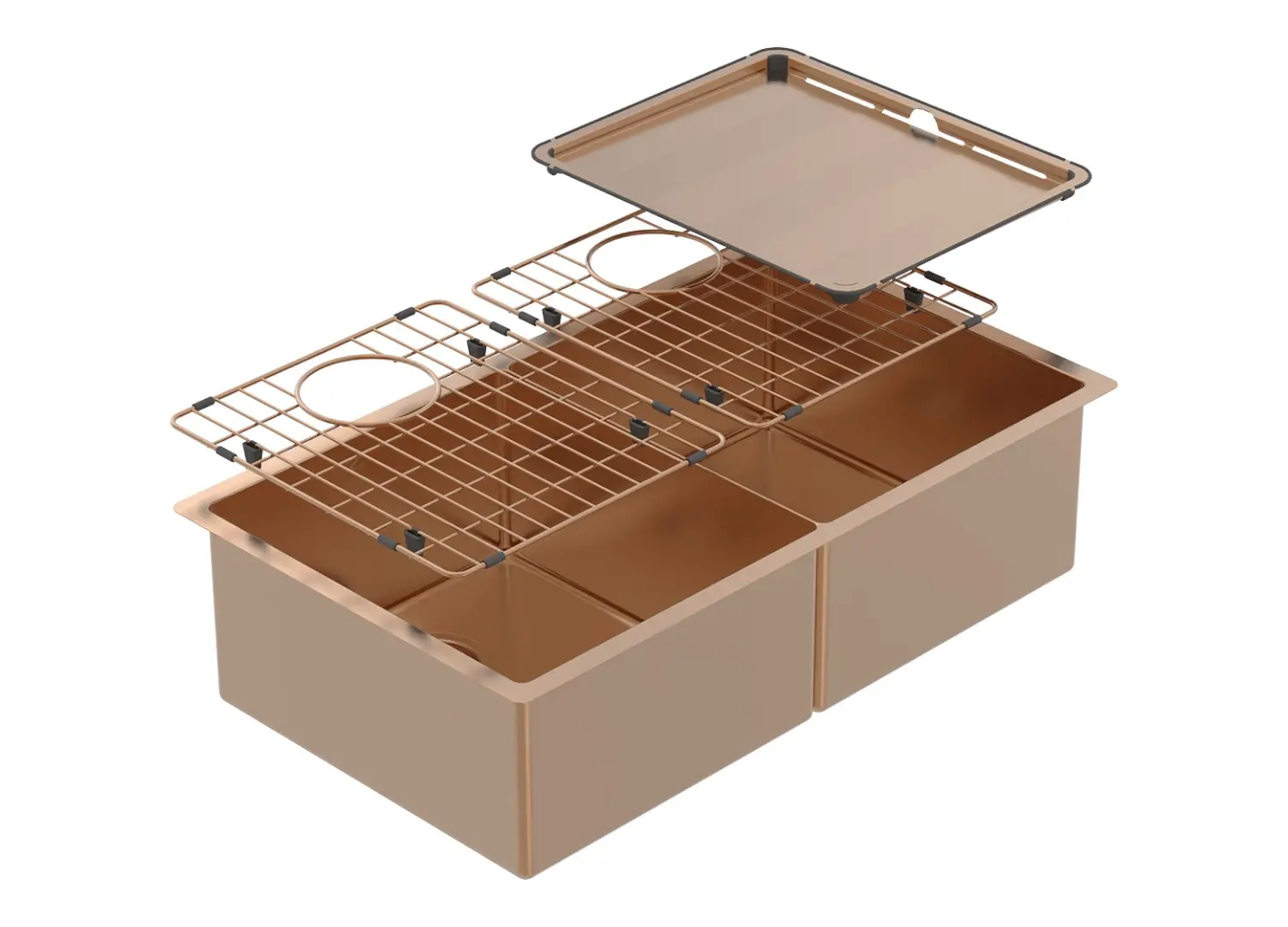
Increasingly, the sink can also be understood as a preparation zone. Accessories transform the bowl from a place for washing into an extension of the work surface. A chopping board designed to span the sink creates additional preparation space. Colanders allow vegetables to be washed and drained directly over the bowl. Roll-up racks and removable drain trays introduce drying space only when it is required, avoiding the need for a permanently expressed drainer.
Renowned for their unwavering commitment to exceptional stainless-steel craftsmanship, this Barazza example showcases the kitchen sink, tap and accessories available at Abey. Photography courtesy of Barazza
Equally relevant is Abey’s approach to sink accessories, which allow individual sinks to function as compact workstations:
Fitted chopping boards
Colanders for cooking
Roll-up racks and drain trays
Abey’s range illustrates the breadth now available to the specifier. Its stainless-steel collections include single, double and intermediary bowl formats, while the Piazza collection introduces finishes such as copper, black and gold-toned stainless steel for projects where the sink is intended to participate more visibly in the material palette. Through Schock, composite options provide another route, particularly for kitchens seeking a more monolithic relationship between sink and surface.
The most successful specification is ultimately the least generic. Material establishes the visual character; bowl configuration responds to the way the kitchen is used; dimensions establish comfort and capacity; and accessories determine how efficiently the sink participates in preparation, washing and cleaning. Considered together, these decisions turn one of the kitchen’s most utilitarian elements into an integral part of its architecture.