
Across kitchens, bathrooms and living rooms, designers are integrating joinery worked by hand—surfaces that catch the light, hold the maker’s mark and counter the slickness of flat-faced cabinetry.
There is a clean and minimalist appeal to joinery that sits perfectly flush. But a more textured counter-move is afoot: hand-carved, hammered and rippled timber surfaces that wear the maker’s mark. These catch the light differently and bring a layered kind of warmth to a room. Across bathrooms, kitchens and living rooms, designers are commissioning joinery whose texture does as much work as its tone. Here, we step inside five projects where the hand-worked surface becomes the design moment.
Casa Norte by Bosko
Szczecin, Poland
At Casa Norte by Bosko, the kitchen takes a more playful approach to texture. Cabinet fronts are dimpled with deep, generous divots—a chunkier hammered effect that lets the natural warmth of the timber come forward and play against blush-toned zellige tiles and bold blue island bench. The result is light, tactile and buoyant, a kitchen that earns its character from texture as much as colour.

At Casa Norte, limewash walls and timber flooring set a soothing base, paired with etched oak joinery and handmade tiles.

Paired together in the living room is a Momu Bobbi Modular sofa with mohair fabric, a Daniel Boddam Wave chair, Peter D Cole standing lamp, Armadillo rug and custom coffee table—also featuring a carved, dappled surface.
Surgeon’s Haven by Studio Tali Roth
Wurundjeri Woi Wurrung Country / Melbourne, Australia
Latem by Benoît Viaene
Sint-Martens-Latem, Belgium
Belgian designer-maker Benoit Viaene treats timber with the reverence of a sculptor, coaxing surfaces that ripple and undulate. From furniture to doors, the imperfection of the hand is intentionally left on show. When interviewed on his Latem project, Viaene says, “I’m intrigued by how light interacts with the material; what kind of story does it tell?” Driven by this curiosity, the architect and self-taught craftsman employs a range of techniques to craft key elements from wood, including the primary bedroom vanity.
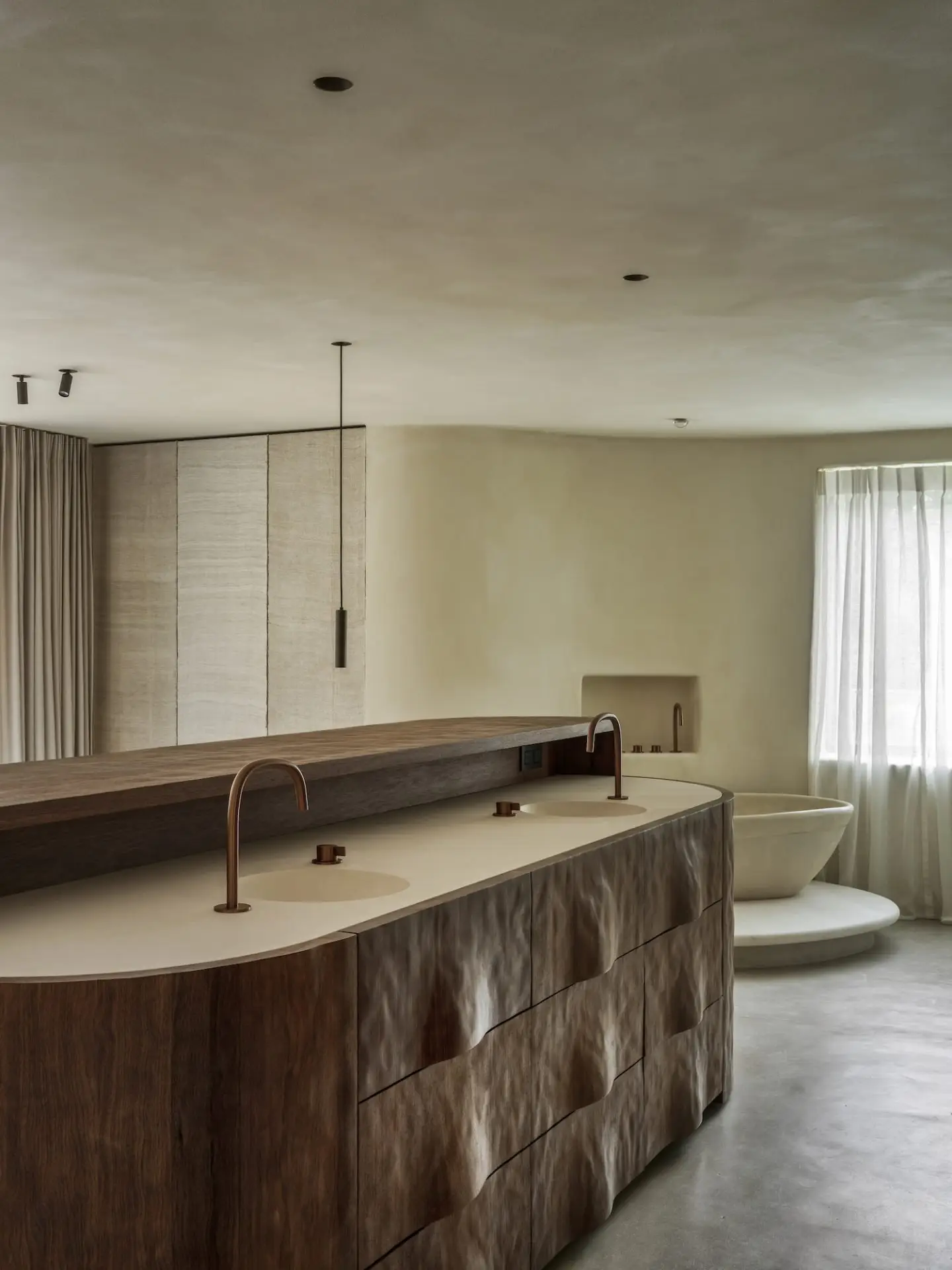
Organic and rippled, the work of Benoit Viaene carries a soulful quality. Working across furniture and spaces, they harken to the handmade, inciting a sense of calm.
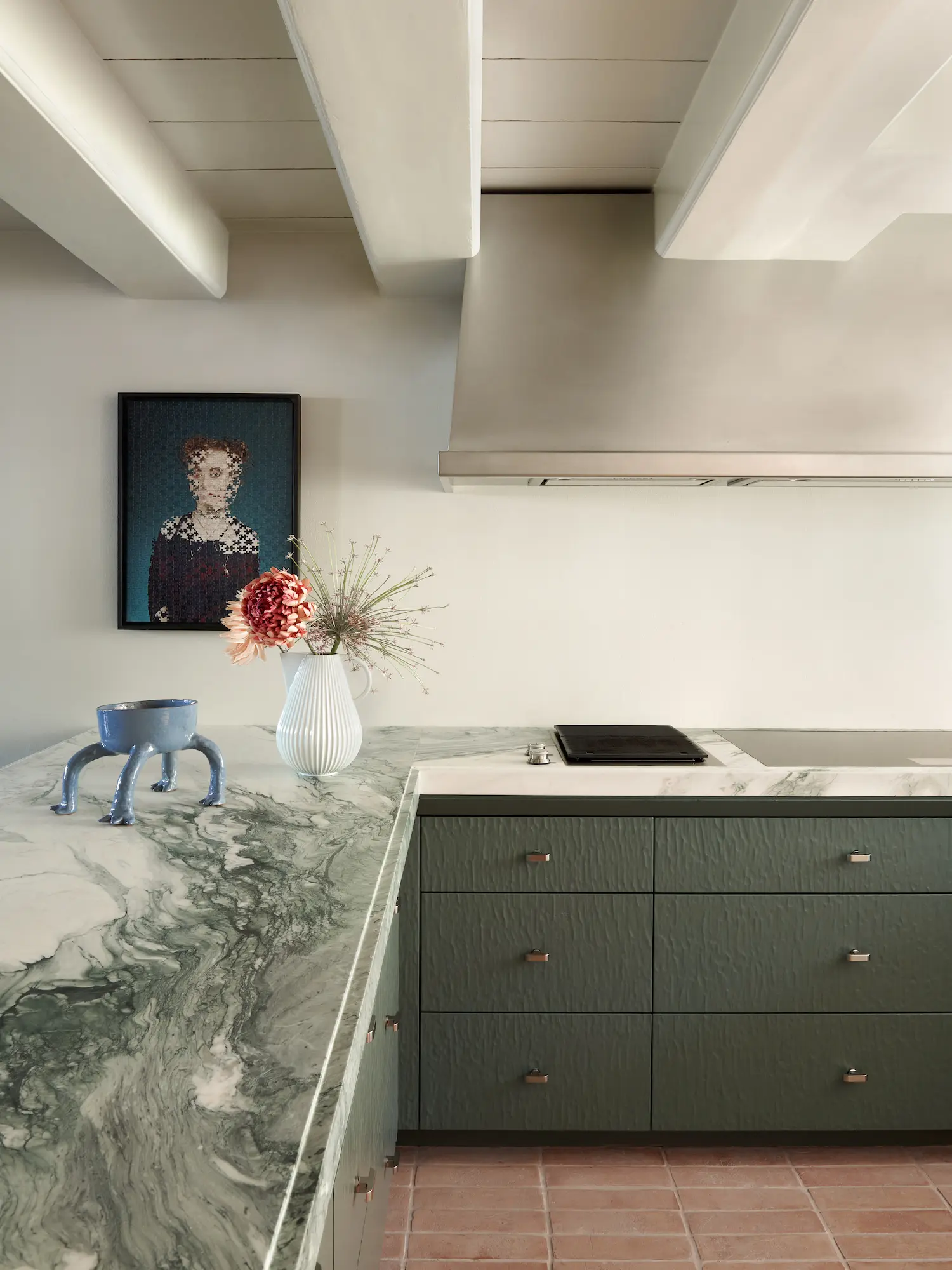
A subtler dimpled effect, the kitchen at designer Thomas Geerlings own home uses texture to great effect. The finishing touches are the Vervloet knobs, a 1970s vintage Avant Garde table lamp by Edera Radici for Sagim and the artwork, ‘Within 15 Minutes’ (2017) by Alma Haser.
Framework Studio Founder Thomas Geerlings’ Home
Amsterdam, Netherlands
In Framework Studio founder and designer Thomas Geerlings’ own kitchen, the hammered effect is dialled right back. Joinery in a cool, dark green-grey carries a subtler textured face, paired with a natural stone top whose green veining draws the palette together. Honed silver hardware picks up those same cool notes, while the textured timber reads almost like a brushstroke—a study in tonal variation where finish, as opposed to colour, does the heavy lifting.
Hawthorn House by Arent&Pyke
Wurundjeri Woi Wurrung Country / Melbourne, Australia
In the en suite off the main bedroom of Hawthorn House by Arent&Pyke, a custom vanity in solid, hand-carved American white oak offers a sense of refinement. A Calacatta Viola top from Artedomus crowns the joinery, while the walls—a layered composition of Verde Guatemala marble, Igloo Gloss tiles and Travertine Romano Classico—provide a rich backdrop for the pale timber to register against. The hand-carved finish lends the piece an elemental quality, where the texture is read by the hand as well as the eye.

Layers of neutral toned materials at Arent&Pyke’s Hawthorn House are countered with a dark green hue and the rippling combination of textures across tiling and joinery.