A historic building in Poland is bestowed with a new identity that draws on the depth and sophistication of local craftsmanship.
A former 1930s high school dormitory in southern Poland was purchased by a couple who envisioned making it their home. Carefully, they contemplated for a few years before entrusting the project to Paradowski Studio.
“When we visited it for the first time in 2019, it was not in its best condition,” Paradowski Studio designer architect Piotr Paradowski explains. Designer Zuza Paradowski adds, “There wasn’t much left for us to draw inspiration from other than the building itself. We therefore focused our research on the characteristics of Polish architecture of the 1930s.”
The duo relied on detailed client discussions to steer their design ideation to conceptualise the building’s conversion into a villa. Their clients did not refer to social media references. Instead, they invited Piotr and Zuza to visit a close friend’s residence, where they could draw inspiration for their home from an extensive collection of Polish crafts.
Working with a floor plan of 450 square meters over three levels, the duo redefined the dormitory’s programme to make the vast spaces intimately suitable for a home. This involved repositioning the staircase to the centre of the villa and adopting a ‘U’ shaped floor plan. Ornamented with a contemporary deco balustrade, the sculpted staircase performs as a focal feature at the core of the home, restoring historic grandeur that can be observed from various viewpoints.
To craft these artisanal moves, Paradowski Studio searched and collaborated with local artisans who could execute their vision. Delicately focusing on all the fine details, every element of the home’s interior and exterior required starting from scratch. Piotr explains the project took four years to complete, as the only original elements preserved were the restored windows.
The couple’s strong emotional connection to the home and the value of local references navigated the selection of crafted finishes, Zuzu Paradowski explains. She adds, “We wanted to create the atmosphere as close as possible to the time the building was constructed.” Design gestures that recall Poland’s 1930s historic craftsmanship are featured. These include brushed and hand-lacquered custom joinery in the kitchen and bathroom vanities, precious wood veneer panelling and a selection of elaborately veined stones, which reinstate the aesthetic codes within the home.
Furnishing the walls, the soft buttercream paint cohesively ties the range of design expressions that have been applied using layered textures, materials and architectural details, which include the series of arches and elaborate staircase.
Redeemed with a new identity far exceeding its first, Paradowski Studio has poetically orchestrated Birch House with symbolic warmth, depth and crafted sophistication.
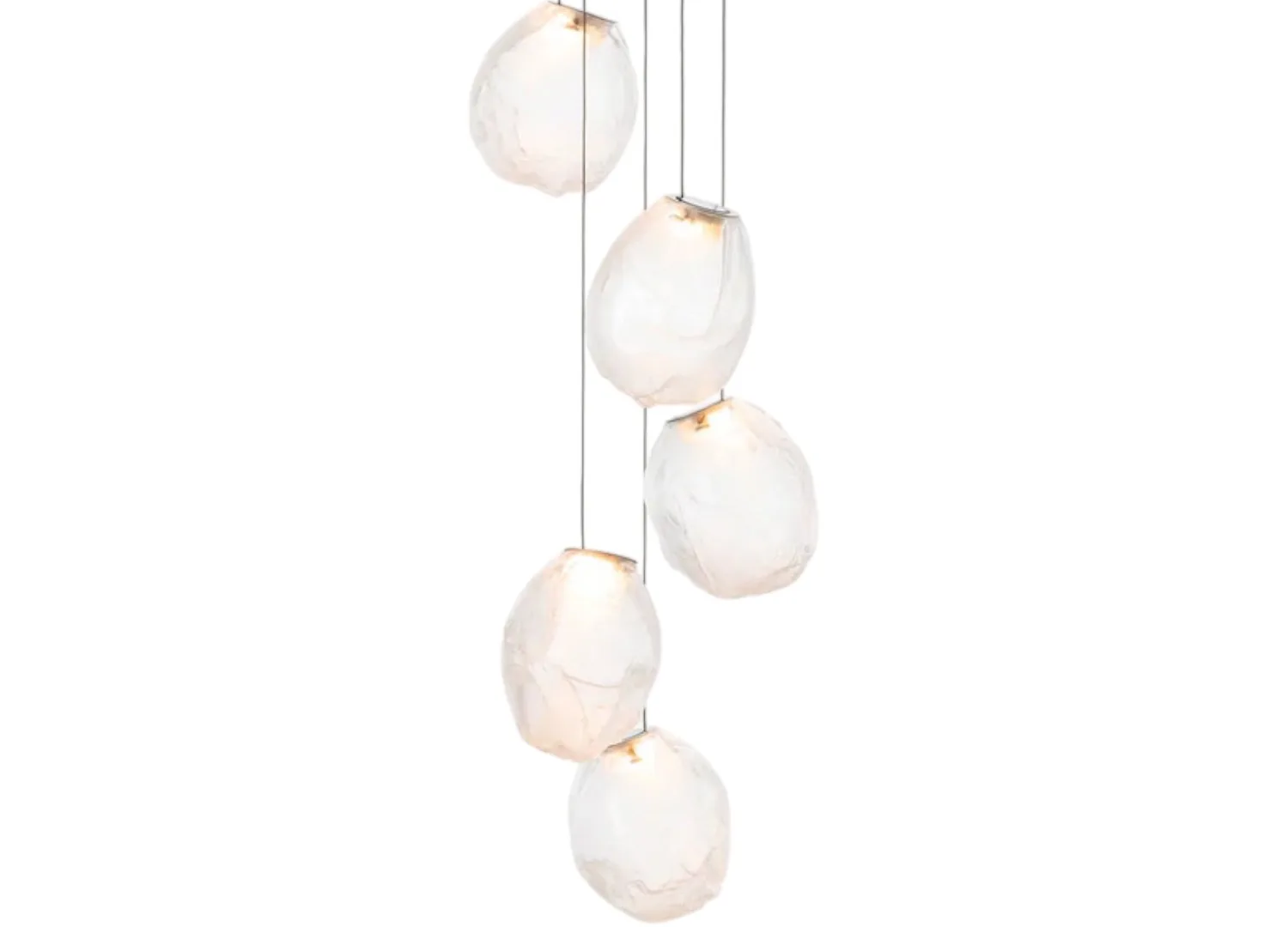
In the dining room, a Paradowski Studio walnut table is featured under a custom-designed Resident pendant, Robert Guillerme and Jacques Chambron chairs circa 1965 tucked underneath. Szancenbach’s ‘Boats on the Shore’ 1958 rests on the stone mantelpiece.
In the living room, a Pierre Augustin Rose Minotaur armchair and Nuage ottoman complement the Carlo Scarpa ‘Cornaro’ 1974 sofa. Featured are Charles Dudouyt 1940 chess game, and Maria Sowińska’s ‘Przemyśl’ and Stanisław Dawski’s ‘Woman’ artworks.
The entrance features Fornace Brioni Terracotta floor tiles, with a Luigi Scremin 1940s carved walnut and Paradowski Studio custom-designed pouf.
Ornamented with a contemporary deco balustrade, the sculpted staircase performs as a focal feature at the core of the home, installing a sense of historic grandeur that can be observed from various viewpoints.
Pawel Szczerba 1959 ‘Nike’ sculpture is perfectly positioned with the sculptural staircase, with Eucalyptus veneer panelled walls, Ceppo di Gré flooring, and illuminated by a Bocci wall lamp.
In the office, cherry wood panelling adorns the cabinetry and complements the burl wood table. A Christian Dell 1936 table lamp is featured with Robert Guillerme and Jacques Chambron’s chair tucked under the Paradowski Studio custom-designed desk.