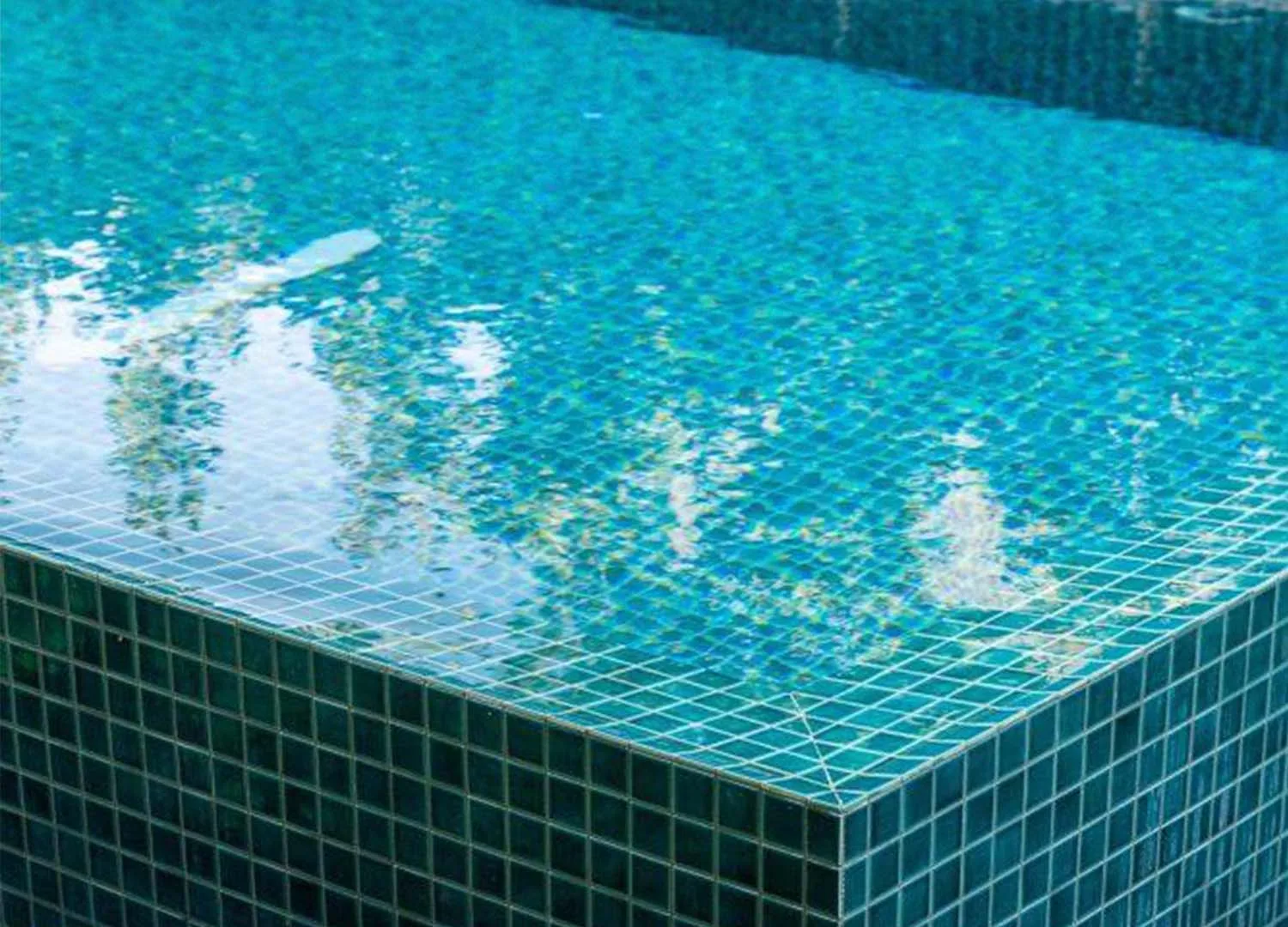
More than a place to swim, the natural pool at Holocene House is a landscaped oasis and a living system that welcomes wildlife, and dances light throughout the home.
Holocene House by CplusC Architectural Workshop puts a natural pool at the heart of home life, treating water as landscape, utility and theatre. The Sydney home, which is carbon positive and certified by the global Active House Alliance, turns inward from its postcard oceanfront views to create a layered, living watercourse that flows through the site. At the centre of it all is the self-cleaning, chemical-free natural pool—the project’s organising idea.
The team approached the pool as ecology first. “A natural pool is basically a billabong with a little bit of an artificial engine,” managing director Clinton Cole notes. Instead of chlorine, the system relies on a biofilter and a sequence of “polishing ponds” filled with reeds, charcoal and pebbles. Water trickles in at one end, is cleansed as it moves through and is hit with UV and returns via a small waterfall. The water is continuously surface aerated, and maintains clarity by plants doing the work nature designed them to do.
Key to the success is its placement within the sloping site. Cole explains that the team began with the sun’s path, rather than the ocean views. As such, the pool is set to catch morning and afternoon light and to throw reflections through the long plan, so the living spaces glow and ripple as the day shifts. “We want the water to do as much as humanly possible: reflect, refract, animate—so you feel those nuances as light and seasons change,” Cole shares. With cross-breezes running along the east–west axis, and every room opening to garden or sky, the pool is both a lens and a literal battery.


Surplus solar energy is diverted to heat the pool via a heat pump. The arrangement is part of a broader, regenerative system that includes a 15-kilolitre underground rainwater tank, greywater for irrigation, low-toxicity finishes, and spotted gum Shou Sugi Ban cladding that meets BAL-29 bushfire requirements.
As a natural pool system, it also supports local wildlife, from dragonflies skimming the surface, to the coastal plants that thrive. Most beautifully is the fact that the home and pool are a bandicoot corridor, allowing endangered fauna to forage undisturbed at night. “The pool is the core of that ecology,” director and senior project architect Hayden Co’Burn says.
From a technical perspective, the ‘polishing pond’ sequence is the unsung worker bee. Water moves from the main pool, into a smaller body of water that allows targeted filtration, aeration and sanitisation before the water cascades down into a waterfall at the home’s stepped entrance and is recycled back through. UV exposure along this process further assists with keeping the water clean, without the need for chlorine or chemical additives. Maintenance is straightforward: occasional vacuuming by the concealed pool robot and weekly cleans of the sponge filter.
Collaboration with specialist partners was key to the result. CplusC worked with pool experts Land Forms, led by Julien Rey, to bring seasoned expertise on the integration of natural pools. Landscape architects Duncan Gibbs guided the canopy and ground plane, selecting resilient coastal species that will adapt over time.
The homeowners were the spark behind Holocene House’s natural pool, arriving with the idea and the conviction to see it through. Drawn to CplusC’s regenerative track record, they backed the concept at every turn, insisting the pool remain an ecological engine integral to the whole home. As Cole puts it, the clients “kept the compass true,” ensuring the natural pool stayed central to comfort, ecology and daily life.
In Holocene House, the natural pool is a daily reminder, but also a ritual. It’s proof that most times, the best solutions come from the natural world, which Co’Burn confirms: “It’s as simple as letting nature do the heavy lifting—and designing so it can.”