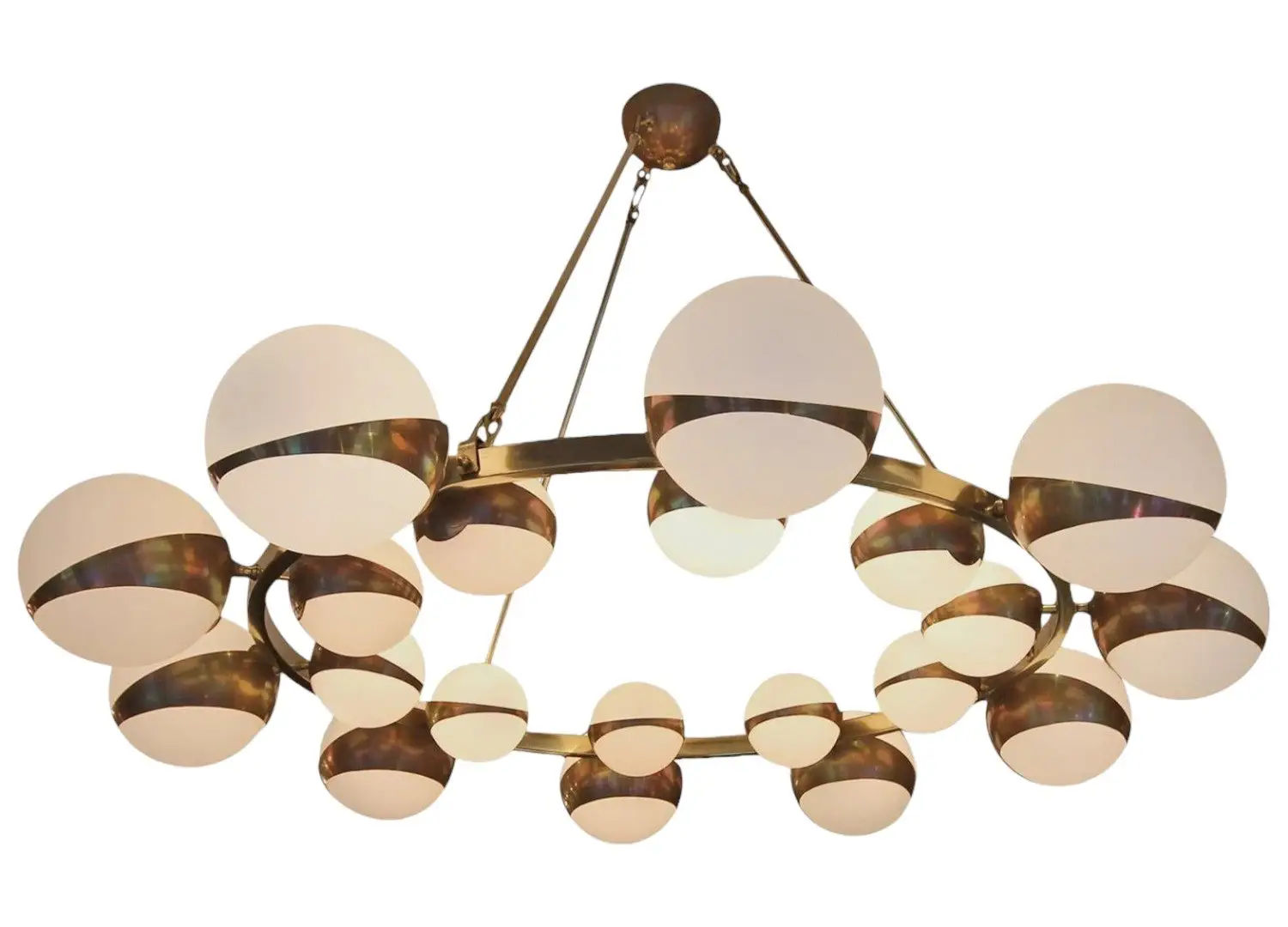
A triptych from Untitled Anxious Red Drawings by Rashid Johnson hangs above the custom sofa. A vintage oak table by Jean-Michel Frank and a lava stone cocktail table by Laplace sit beneath a 1950s lacquered metal and brass light fixture sourced from Sweden. Opposite, a pair of 1970s Emilio Guarnacci armchairs from Laplace Antiques sit alongside a tall 1940s ceramic vase by Georges Jouve, positioned under a painting by Phyllida Barlow. On the mantel, above a pair of 1920s Cobra Andirons by Edgar Brandt, rest a Daum vase and a plaster eagle by Marcel Lémar, both dating to the 1930s.
Respect for heritage and irreverent creativity mingle inside this restored 19th- century Paris apartment.
A touch of eccentricity is the natural order inside the private apartment of architect Luis Laplace and his partner Christophe Comoy, co-founders of the international architecture firm Laplace. Following a years-long renovation process, the Haussmannian residence in Paris’s Place Saint-Georges reimagines heritage through unapologetic texture, décor and ornamentation. Despite being a trove of collectable art and design, Laplace and Comoy maintain that their home is, above all, to be lived in casually and comfortably.
From an architectural perspective, how did you achieve an “eclectic heritage revival” in this project?
Luis Laplace: We approached it as a dialogue with history. The Haussmannian structure, with its high ceilings and mouldings, was never meant to be concealed. Rather, we adapted the flow by closing some of the enfilade doors to create a sense of intimacy and give each room its own character. It remains a 19th-century apartment, but one that accommodates the way we live today.
How do you describe the personality of your home?
Christophe Comoy: The apartment has a strong presence, but it is also generous. The architecture is expressive, and we have allowed it to remain so. We simply introduced pieces that feel like companions—a Jean-Michel Frank cocktail table and the Jacques Adnet light that once belonged to Andy Warhol, alongside bespoke pieces we created, such as our sofa and a coffee table in lava stone. Together, they form an atmosphere that is elegant, a little eccentric and always alive.
From a decorative and stylistic perspective, how is the evolution of heritage expressed?
Luis Laplace: Through layers. We live with antiques and vintage pieces, such as a 1940s Georges Jouve vase and an Armand-Albert Rateau chandelier with a remarkable history, alongside contemporary works, including a custom-designed marble dining table and a Rashid Johnson triptych. These juxtapositions do not compete—they converse. That is what gives the apartment its coherence, even when it brings together very different eras.


How is a sense of eccentricity expressed through the assortment of design objects and artworks curated across the spaces?
Christophe Comoy: Eccentricity arises naturally when objects have strong personalities. In the dining room, for example, a flashing pink neon work by Martin Creed illuminates a red marble table of our own design. In the bathroom, there is a chandelier by Armand-Albert Rateau, first created for Jeanne Lanvin and later owned by Karl Lagerfeld. These objects have stories. Placing them in everyday life gives the spaces a sense of freedom, even of humour.
What role do materiality and texture play in defining the apartment’s various spaces?
Christophe Comoy: Texture makes the apartment human. A patchwork of marbles in the bathroom, Pierre Frey velvet on 1960s chairs, glazed ceramics on the floor, wool curtains. It is these tactile layers that bring the spaces to life—inviting people to touch, sit and feel at ease.

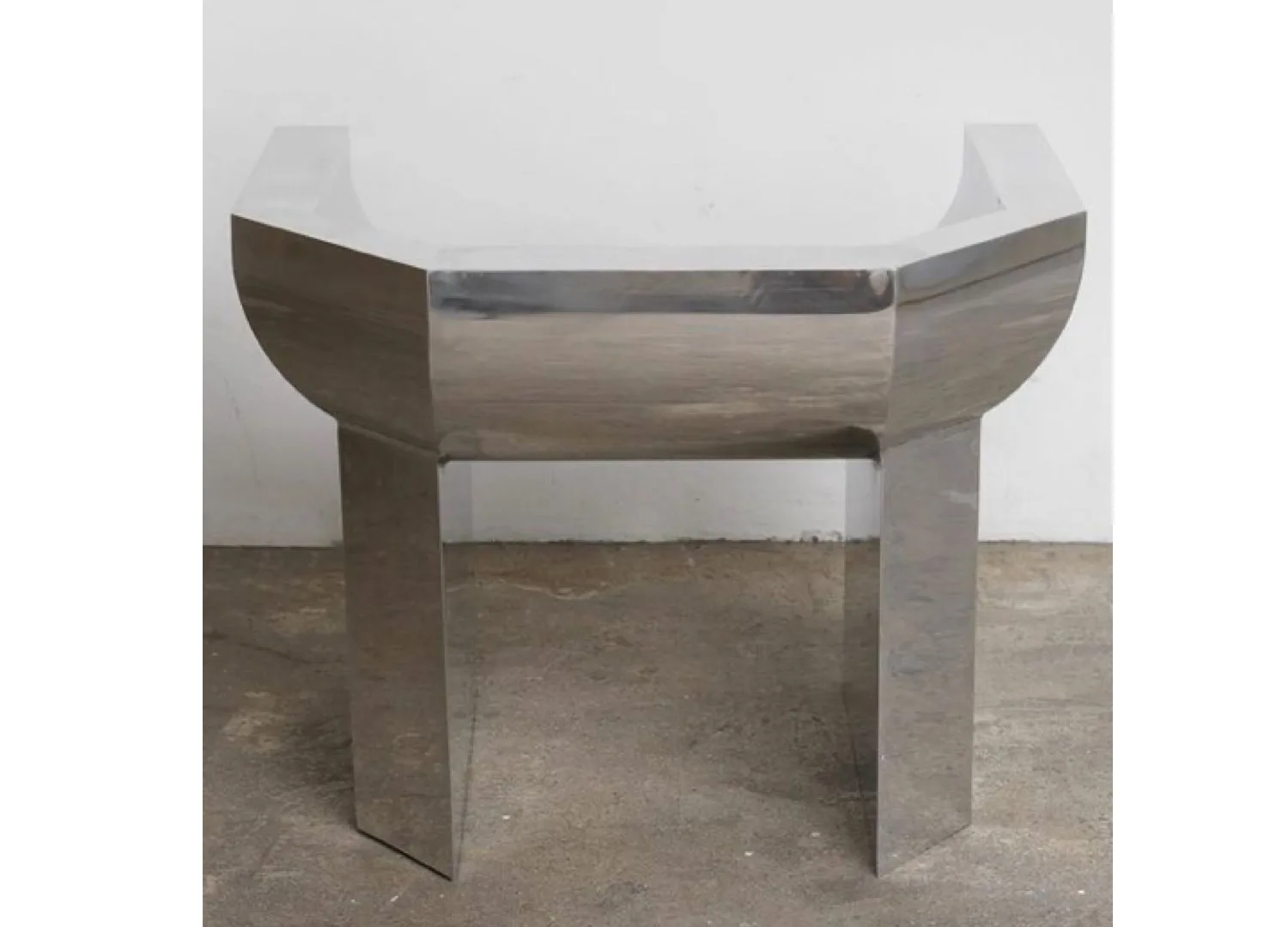
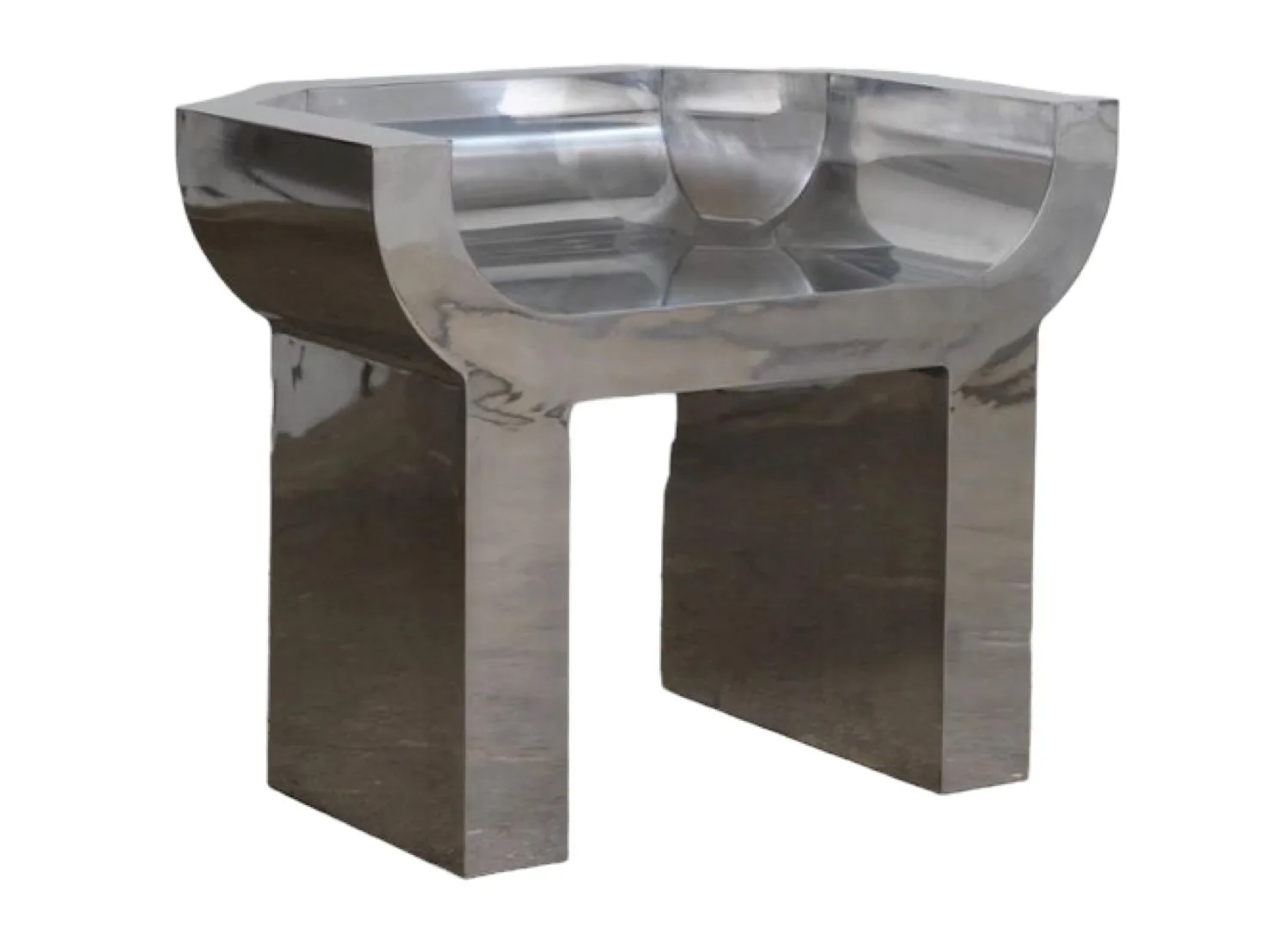
19th-century Haussmannian structural elements, including high ceilings and mouldings, were revived during the apartment’s years-long renovation, as Laplace and Comoy have ensured the home is still in “dialogue with history”. Next to the custom Laplace sofa sits an aluminium Curial chair by Rick Owens and a 1934 Jacques Adnet column light, which once held pride of place in Andy Warhol’s Left Bank Paris home.


In the study, a 1950s Jean Touret carved oak sideboard sits alongside a 1955 Mathieu Matégot floor lamp, while a 1967 Vico Magistretti Pentaclinio hanging light illuminates the space.
You often collaborate with artists in your projects. How do these collaborations influence the creative process and its outcomes?
Luis Laplace: Collaborating with artists is at the heart of our work. These exchanges bring new perspectives and often compel us to see space differently, not only as architects but as storytellers. Artists challenge conventions and encourage us to take risks, which keeps our practice alive and evolving. The result is always richer; architecture becomes more than a backdrop—it becomes a dialogue in which the spaces and artworks resonate together, creating experiences that feel unique and authentic.
You have described the reception rooms as “almost vulgar” in their ornamentation. Do you think visitors share this perception?
Luis Laplace: The rooms are exuberant—the mouldings, the scale, the detailing are almost excessive. But instead of resisting, we embraced the exaggeration. Visitors often smile when they hear us describe them this way, because they sense the playfulness. It is not about irony, but about taking pleasure in what already exists.

The dining room showcases a red marble dining table designed by Laplace and Comoy, complemented by a flashing pink neon work by Martin Creed. A set of vintage 1960s chairs, re-upholstered in a Pierre Frey velvet, surround the table.
What do you consider to be the most surprising or revelatory element in your home?
Luis Laplace: Perhaps the bathroom. People expect something discreet, but instead they find a Mondrian-like marble shower and the extraordinary Rateau chandelier. It is extravagant, yes, but also deeply personal. For us, it is a room of joy. You have previously described living with objects as being “surrounded by friends”.
If you had to leave your home suddenly and could take only one object with you, which would it be and why?
Luis Laplace: I would take the small Sainte-Thérèse statue my mother gave me before I left Argentina. It has followed me everywhere.
Christophe Comoy: I would bring the Rateau chandelier, because it embodies the spirit of collecting—its history is remarkable. Together, we would choose one of Phyllida Barlow’s drawings, because it represents both friendship and artistic dialogue.
In what ways does the apartment reflect your identity as people, and not just as designers?
Christophe Comoy: It reflects our contradictions—we are rigorous and respectful of heritage, yet we also love to be irreverent and curious. It shows our friendships, our travels and the things we fall in love with. It is not a project—it is our daily life, shaped over time.
Despite its elaborate ornamentation, how have you made this residence feel like a home, and not a museum or gallery?
Luis Laplace: By living with everything casually. Ceramics and books often sit on the floor, art is hung in unconventional ways, and sofas are made to be used. Nothing is staged. The apartment may be filled with objects of value, but they are part of our everyday gestures. That is what makes it a home.
This feature originally appeared inside est magazine issue 58: ‘Creative Minds At Home‘.


A custom bed sits in the centre of the bedroom, with a series of pieces by Phyllida Barlow hanging beside a 1950s Fulvio Bianconi floor lamp for Venini. Above, a 1960s Vico Magistretti ceiling light illuminates the space.

"The rooms are exuberant—the mouldings, the scale, the detailing are almost excessive. But instead of resisting, we embraced the exaggeration."
– Luis Laplace

In the bathroom, a 1925 Armand-Albert Rateau giltwood pendant light, originally created for Jeanne Lanvin and later owned by Karl Lagerfeld, hangs in the centre of the room. Below, a bathtub by The Water Monopoly with Volevatch fittings sits opposite a bespoke patchwork marble-clad shower designed by Laplace in ‘Mondrian style’.