There is a moment at the beginning of every project that interior stylist Karin Bochnik refuses to rush. Before considering colour palettes or selecting furniture, she wants to understand two things: the people who will live there and the home itself.
Produced in partnership with Abode
“There’s always a real sense of wanting to understand the homeowners as well as the heritage of the home,” Bochnik says. “There’s a really fine balance between selecting pieces that are considerate of who’s living in the space while also honouring where we are,” she adds. This philosophy guided every decision at Magnolia House, a home originally reinvented by Robson Rak where generous proportions, soaring ceilings and sharply resolved joinery establish a confident architectural language.
Rather than competing with those qualities, Bochnik’s approach was to introduce another layer, one that softened the architecture without diminishing its clarity. “The architecture really played a role in how we started building the styling,” she explains. “There’s really high ceilings, and all the joinery feels very angular,” she adds.
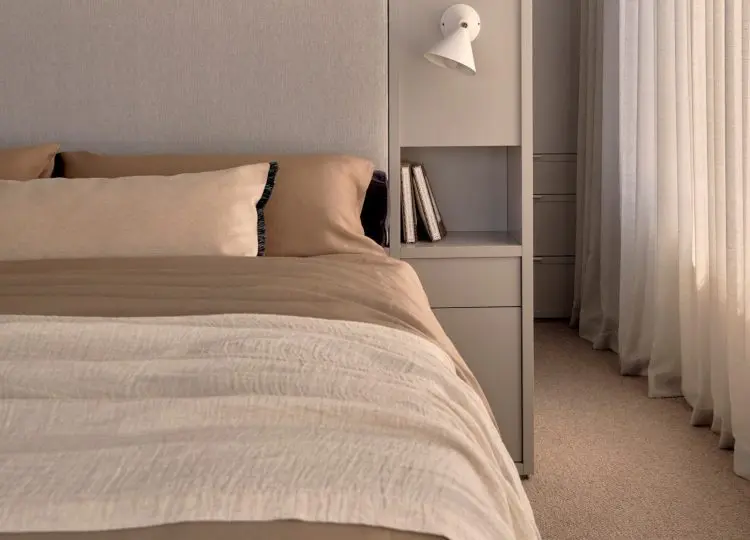
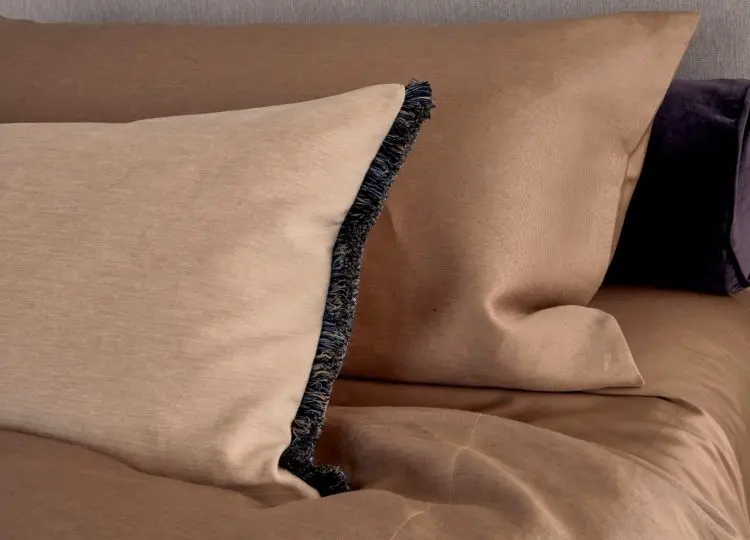
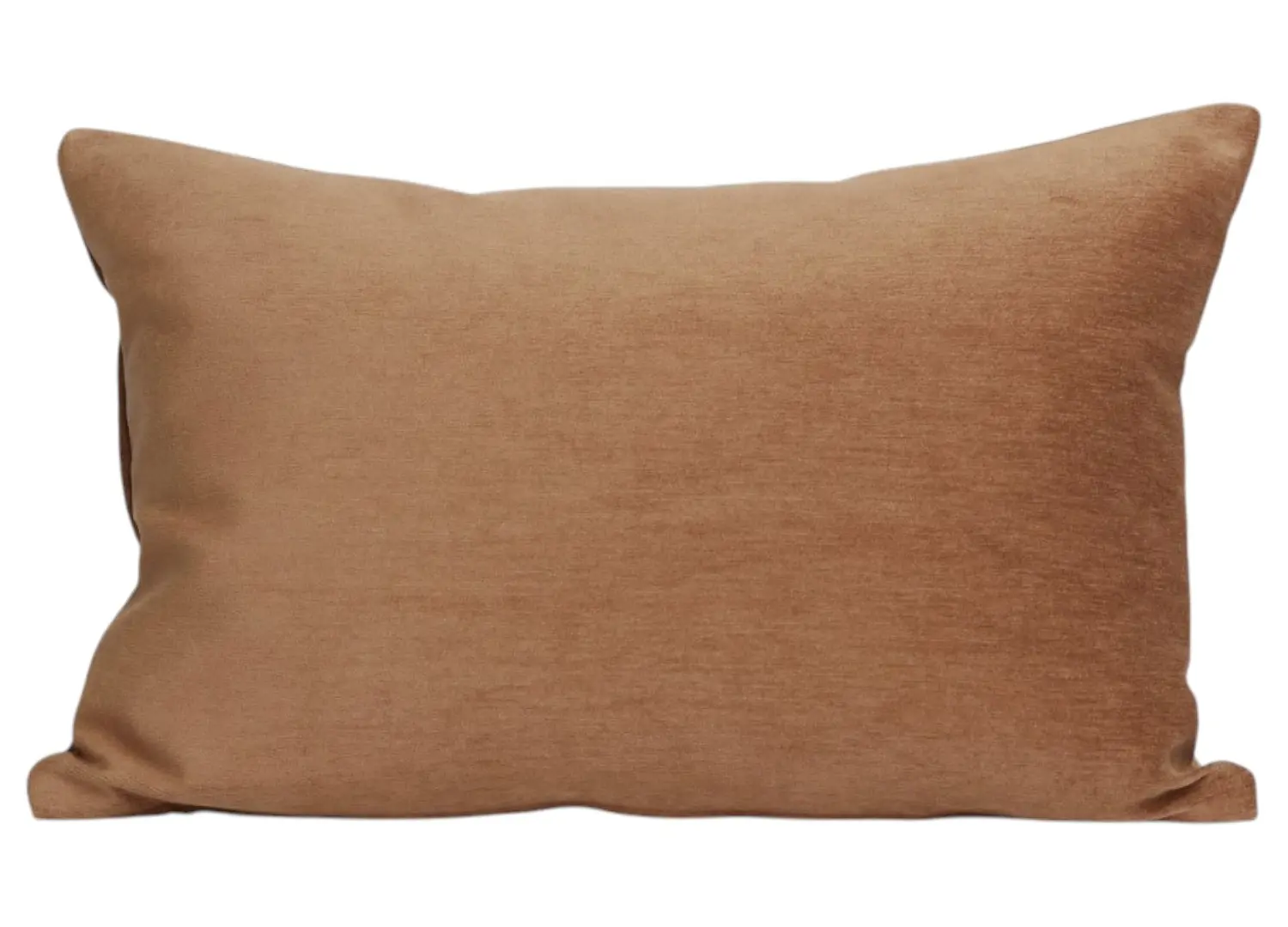
The response was deliberately restrained. A generous bolster anchors the bed, before softer layers of linen are introduced through the Nova custom flat sheet, customised Milano quilt cover, Brera cushion and Rimini throw, building depth without excess. Minimalism remains intact, but the atmosphere becomes noticeably warmer and more inviting. Here, textiles become part of the architecture rather than its decoration.
Over many years of documenting architect-designed homes, est has repeatedly observed that the most enduring interiors rely on material honesty. Timber, stone and natural light establish the framework, but it is often the quieter materials—those touched every day—that ultimately define how a home feels to inhabit. Linen belongs firmly within that conversation.
For Bochnik, Abode’s collections complemented Magnolia House because of their craftsmanship as much as their restraint. “What I like most about the pieces from Abode is that real sense of handmade craftsmanship,” she says. “Down to the stitching, everything feels really considered and handmade, which creates a real sense of quality that’s unique to them,” she adds.
Colour became another opportunity to bring warmth into the home’s measured palette. Caramel tones were layered with rich purples, while cotton sateen introduced subtle luminosity alongside the relaxed texture of Belgian linen. The result is quietly expressive—adding personality without disturbing the calm established by the architecture.
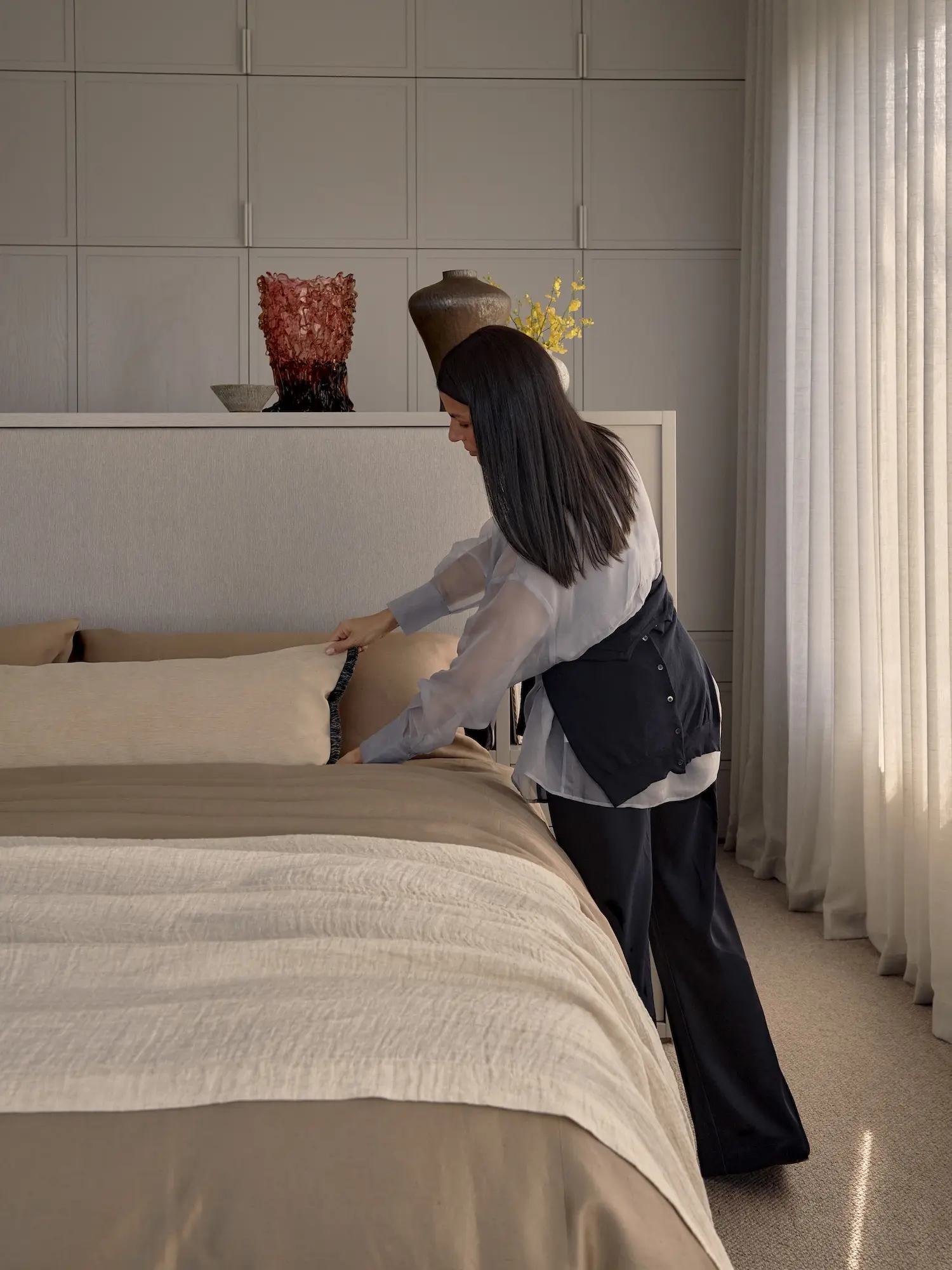
Interior stylist Karin Bochnik specifies the primary bedroom of Magnolia House with her curated selection, specified for the space.

A caramel palette, paired with bespoke details like tassels, a velvet bolster cushion and a linen throw, softens the architectural space. A Medusa vase by Gaetano Pesce, from Curated Editions, sits alongside.


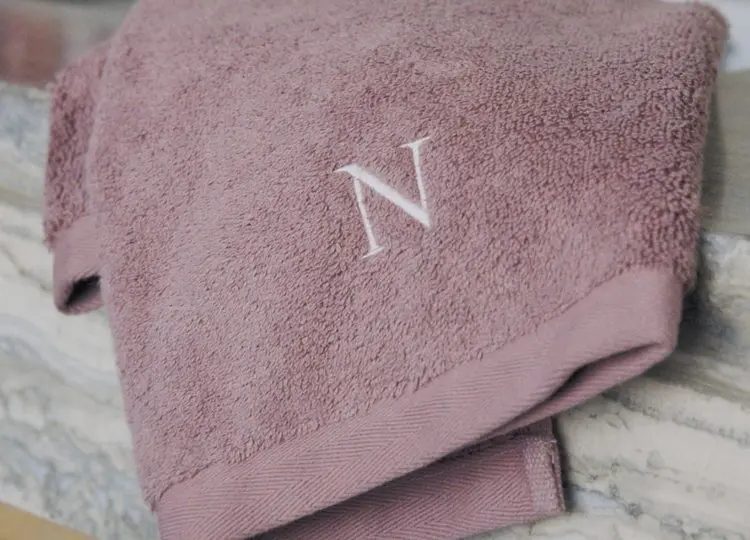
The personalised monogramming by Abode reflects Bochnik’s thoughtful philosophy when styling Magnolia House—understanding not just the home, but the people who live there.
Personalised monogramming completed the story. More than a decorative gesture, it introduced an element of individuality that reflected the homeowners themselves, lending the bedrooms the intimacy and quiet luxury of a finely considered hotel suite. “It was a really beautiful collaboration between us and the homeowner,” Bochnik reflects. “It gave us the freedom to create something that was a little unexpected.”
At est, we believe the best design stories reveal more than beautiful spaces. They help us understand why thoughtful decisions matter. Magnolia House reminds us that exceptional interiors are rarely defined by a single material or product. Instead, they emerge through collaboration between architecture, craftsmanship and careful curation. When textiles are chosen with the same rigour as every other architectural element, they become more than the finishing layer. They become part of the way a home is experienced every day.