At Nikari, wood is the starting point for everything. Founded in 1967 by cabinetmaker Kari Virtanen, the Finnish furniture brand has remained closely connected to Nordic making traditions despite working with some of the world’s most influential international designers. Today, CEO Johanna Vuorio carries that knowledge forward, preserving the tacit skills held by generations of makers while allowing the material itself to shape what comes next.
Vuorio recently joined the local architecture and design community in Sydney and Melbourne as a guest of K5 Furniture, experiencing firsthand how the collection is understood and used in a different cultural context. Nikari and K5 share a deep appreciation for considered design, natural materials and longevity.
est’s publisher Miffy Coady had the pleasure of interviewing Vuorio, who reflects on Nikari’s beginnings and the knowledge passed down through generations of makers.
In partnership with K5 Furniture
Nikari begins with Kari Virtanen and this extraordinary knowledge of cabinetmaking, but also with proximity to people such as Alvar Aalto and Kaj Franck. What do you think Kari learnt from those designers, and what did they, in turn, learn from a cabinetmaker who understood wood so intimately?
Johanna Vuorio: Kari Virtanen was a special talent, very focused and passionate about wood and the ancient traditions of craftsmanship. Alvar Aalto was Nikari’s only customer for seven years, and that collaboration taught Kari to look at wood in a new way. For a traditional cabinetmaker, working with modern design and straightforward forms meant finding new ways of working with wood, where you couldn’t cheat in any way
Then came Kaj Franck, a professor of design at the Finnish Institute of Industrial Arts, who was the first person to ever say the word “design” to this young 19-year-old cabinetmaker. It’s quite special to know that the father of modern Finnish design taught Kari Virtanen what design actually means. We feel privileged to have had these two important mentors guiding the first years of Nikari.

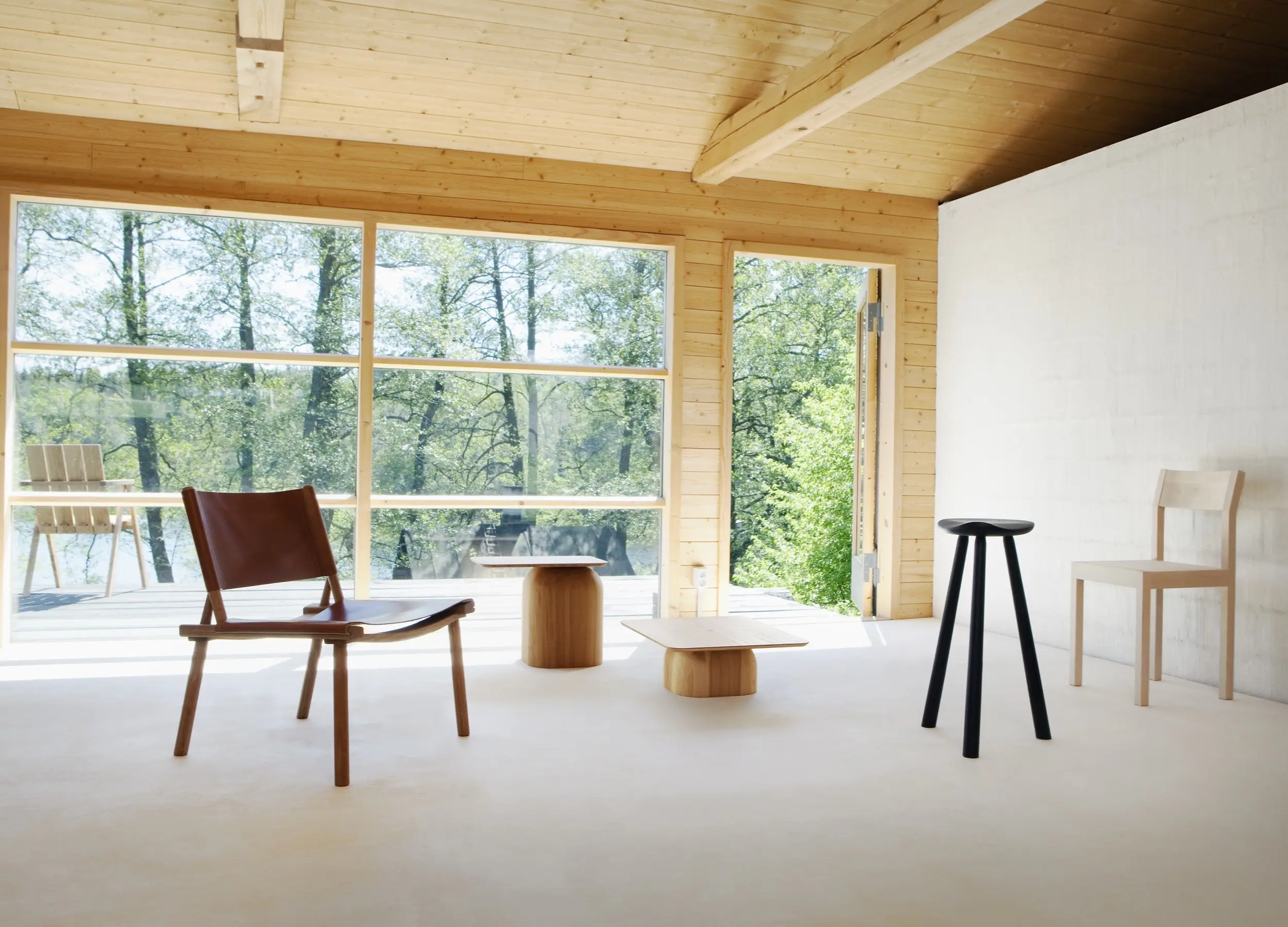
“We definitely feel that Nikari is a story that’s bigger than businesses or human beings,” Vuorio says. “It has always felt like we have this beautiful little pearl in our hands that was given to us, and we’re just taking it forward to the next generations.” Pictured above, left to right: the Nikari Arkipelago KVTT3 outdoor chair, December chair, April tables, classic RMJ stool and Seminar KVT2.
There is something very Finnish in the idea that you don’t dominate a natural material; you understand it. Wood moves, expands, contracts and ages. How does that knowledge actually change the way a Nikari chair or table is designed?
Johanna Vuorio: Nikari is located in the oldest machinery workshop in Finland—in Fiskars Village, which was founded in 1649. We have a beautiful sawmill right next to our building, where our cabinetmakers can go on foot and select the timber themselves. This is the starting point for everything we do.
We always say that everything we do begins with the material and its physicality, and that has an effect on everything. It somehow brings something extraordinary, something very special, into every piece we make. Whether it’s a British, Japanese or Finnish designer, there is always a very distinct design language that is intriguing and somehow very close to the designer themselves. But the way we work with the material and the way we finish it brings something very Nikari, very Finnish, into each product.
Nikari could have become a very different company once it began reaching an international audience, yet you’ve kept production intimately connected to Fiskars Village. What does that place give Nikari that couldn’t simply be replicated elsewhere?
Johanna Vuorio: For us, making good, proper things out of wood while following the traditional methods of Nordic craftsmanship means that, above anything else, we want to continue the craft. We want to teach younger generations how to work with wood the old-fashioned way, but also the most durable way. So we stay in Fiskars. Having our own hydropower plant and our very special workshop atmosphere feels like something that should be cherished for future generations.

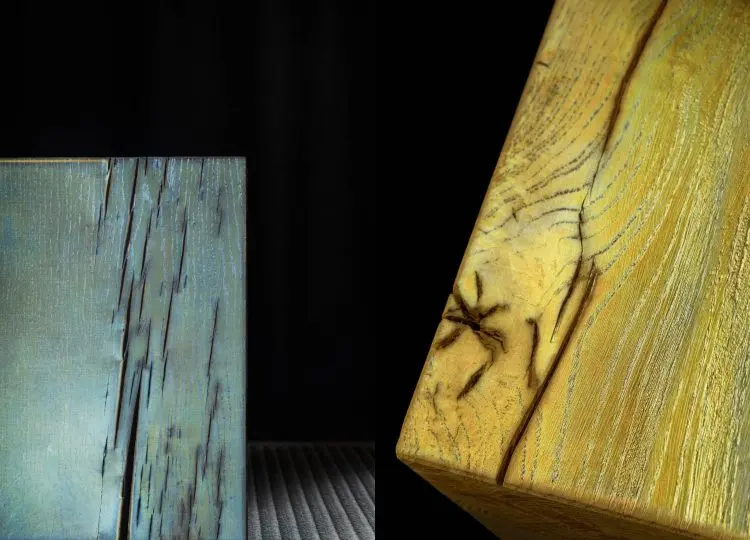
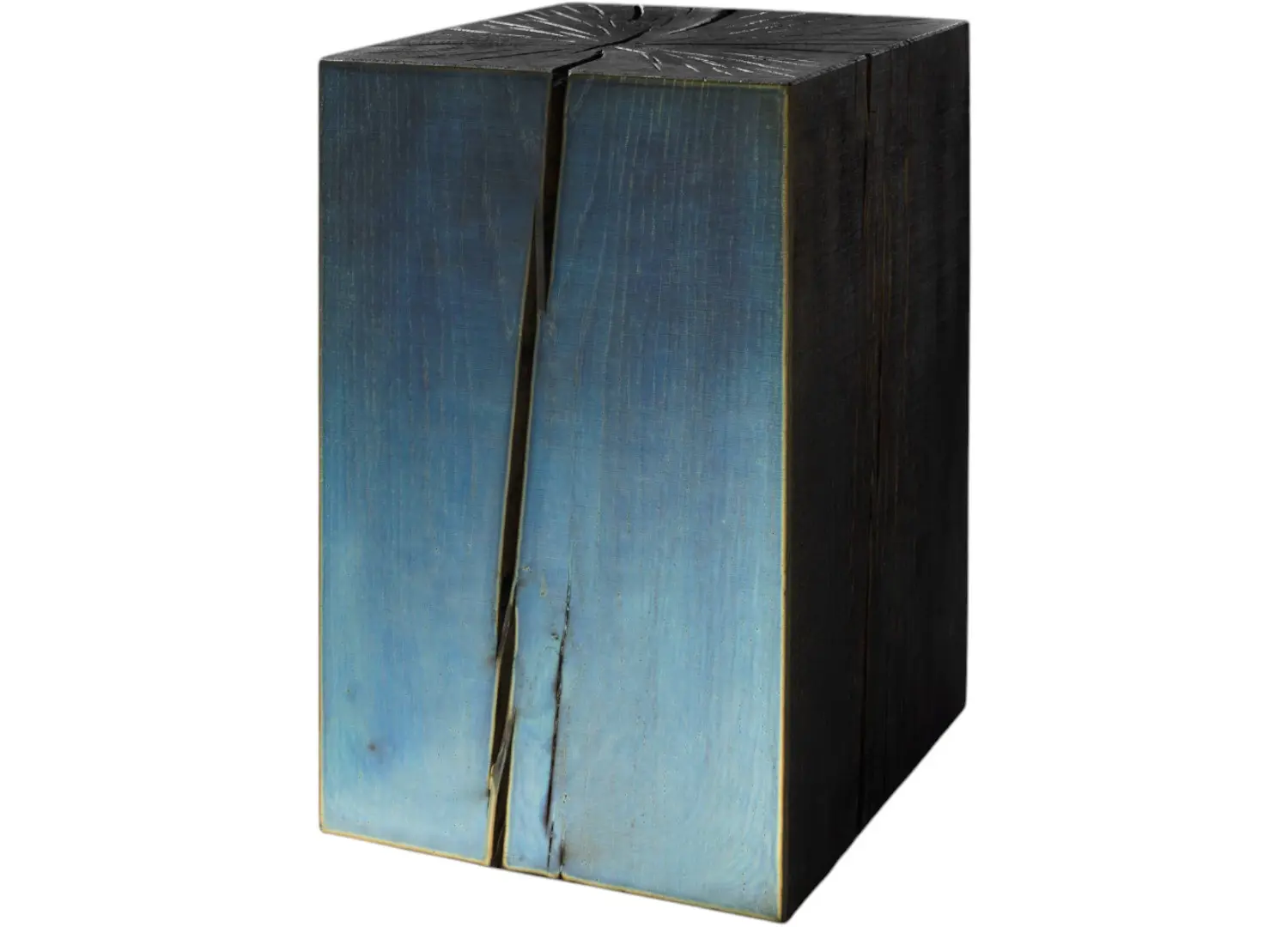
The Biennale stool and Centenniale table, for example, are always different. Each one shows the beautiful grain, knots, defects and uniqueness of the wood. That really makes those pieces feel very art-like. with this image
When you took over from Kari, you inherited much more than a company. How do you preserve knowledge that isn’t necessarily written down, but sits in someone’s hands and experience?
Johanna Vuorio: When we had the privilege of continuing the company and the story of Nikari, one of the most difficult and, at the same time, most important things was the tacit knowledge that sits in the minds and hands of the cabinetmakers. My partner, Jenni Roininen—and the creative director of Nikari—and I were quite nervous about how to continue the story and learn everything that we couldn’t simply read somewhere. So we started by interviewing everyone. Every week we had lunches together, and we wrote down everything they shared.
We also sat down with Kari Virtanen himself and talked for ages. We heard amazing stories about Nikari’s history, some of which no one had heard before. Now it feels like it’s our duty to teach the next generation, to keep the skill alive, to bring something new to it and to tell the story internationally. We want to do our best to keep this wonderful cultural heritage alive.
Contemporary design is often preoccupied with novelty. Nikari seems to operate at almost the opposite tempo, refining, reducing, making something that might remain relevant for generations. How do you define progress in that context?
Johanna Vuorio: We come from a country that’s quite well known for its quietness, and we believe that being humble is one of the best qualities a person can have, which sometimes surprises people. In today’s world, when there is so much noise around us, we want to take a step back and become even quieter. In a way, it’s quite natural for us to focus on what we do and connect with people who appreciate this way of thinking and living.
For us, it’s about showing what necessities you can live with and what is just extra noise. What is a happy life, and how can you live with peace and have the possibility to focus on beautiful little details? If you have too much of everything around you, it becomes more difficult. Or if you have too many synthetic materials around you, it feels a bit suffocating, let’s say.
You’ve worked with designers including Cecilie Manz, Jasper Morrison and others who arrive with very distinct design languages. What happens when an external designer encounters Nikari’s very particular culture of making? Who ultimately has the final word, the designer, the cabinetmaker or the material?
Johanna Vuorio: We are very happy to work with the designers we work with. It feels like we all share something similar and speak the same language, and we feel that we learn from each other. Hopefully they learn something about the material and the craft, and we always learn a new view on a product or a new angle to a problem that needs to be solved. But in Nikari’s case, the material, the old wisdom of trees, is there, and we all wish to give it its space and the dignity it deserves. That’s really at the heart of what we do, and I think our designers would agree.

"When we took over and inherited Nikari’s beautiful story, it felt quite daunting to learn every detail, from the craft itself to everything that makes up Nikari’s DNA."
– Johanna Vuorio

We hear the word sustainability constantly now, but Nikari was working with ideas of local timber, repair, longevity and responsible making long before that language became fashionable. Has the design industry complicated something that was once quite simple, making fewer things, and making them extremely well?
Johanna Vuorio: From a sustainability perspective, I’d say there are definitely things that many companies and brands are now desperate to somehow fix or improve. We need to step back from just producing more and more. In today’s world, we need proper things and fewer things around us. For us, that’s always been something very true and deep in the way Nikari works.
When I first stepped into our workshop, I felt this really difficult-to-explain sense of respect. You could see it in the cabinetmakers’ hands and hear it in the way they talked about the generations before them. We also try to think about future generations and, in every decision we make, we try to see how it affects seven generations forward, just to respect future generations as well. It’s a very natural way of thinking for us.
If you imagine Nikari another fifty years from now, what would you be disappointed to discover had disappeared?
Johanna Vuorio: We hope that this honest and very pure way of creating design pieces will still stand out then, and that Nikari will represent something of this era, carrying its cultural continuity forward to people 200, 300 or even 500 years from now.