A paragon of collectible design, Palladium celebrates the materials and objects we gravitate to and how, with time, they distinctively characterise home.
Reflecting on the experimental, non-linear designing of his Melbourne home, interior designer Nickolas Gurtler confesses, “I would probably make the worst client.” Since founding his namesake studio, Nickolas Gurtler Office, in 2015, he has shaped graceful, edited outcomes for myriad residential and commercial spaces. “Designing for others, I have a great deal of conviction, but I’m surprisingly indecisive when it comes to myself,” he explains, highlighting the professional eye employed to evolve his own space.
Home to Gurtler and his Corgi, Hermes, the east-facing apartment was originally designed by Cera Stribley, featuring elevated base finishes, natural light and strategic zoning. The apartment comprises open-plan living and kitchen, a bedroom, bathroom and a bedroom repurposed for entertaining, dining and study.
Considering its strong bones, Gurtler describes the recent uplift as “targeted interventions”, informed by a kaleidoscope of influences prompted by a unique culmination of curiosities. From his tattoos to his project names, classical mythology and history fuel elements of his creativity. The name Palladium references “the statue of Pallas (Athena), said to safeguard Troy,” Gurtler says, the protective sentiment resonating. “I see the apartment as a sanctuary of sorts, filled with the things I value most,” he adds.

Zenn Design Backless Elba stools sit beneath the kitchen’s tundra marble bench. Artwork from Los Angeles-based artist Bradley Duncan hangs above a Gaetano Pesce vase and Theodosius Ng ceramic vessel, complementing the custom cabinetry that departs stainless steel from commercial associations. “I love the softness, which comes through because of the hand-finished process,” Gurtler says.

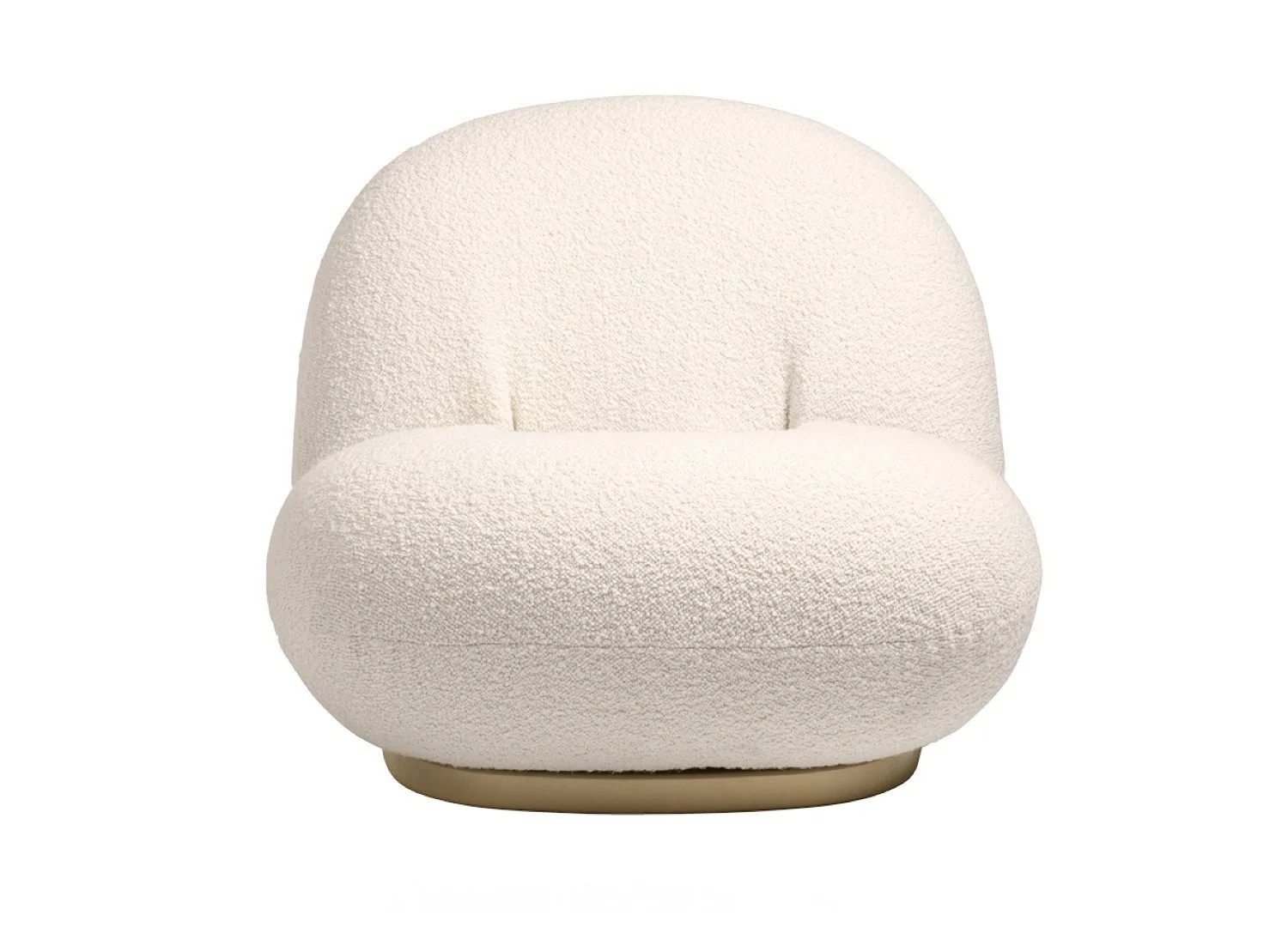
The living space features a curved, Gubi Pacha chair and a 1960s steel and marble Knoll Platner side table by Warren Platner. A Spaceman Studio floor lamp, Furnished Forever Waffle armchair and a plinth, with a vessel by Lost Profile Studio, sits behind a 1980s coffee table.

More literally, the lustre of Palladium-like metal ricochets off silver-toned finishes throughout, layered with nods to Vincent Van Duysen and Nicolas Schuybroek, Belgian designers whose “restraint, material palette and sense of form,” influenced Gurtler. “I’m drawn to this peaceful yet composed way of designing,” he says.
A neutral palette, with the sandstone spectrum of a pebbled shoreline, emerged somewhat as a surprise to Gurtler, who had colourful intentions. Instead, sisal fibres, linen, porous and metallic surfaces reflect his attitude towards the unsung virtues of materiality. “Natural materials are at the core…and I also love patina, chips in stone and imperfections in cast metal. They layer personality into a space,” he shares. The kitchen’s new overhead cabinetry experiments with custom, random-grain stainless steel, while a jute rug, upholstered bedhead and linen drapery overlay cosy warmth.
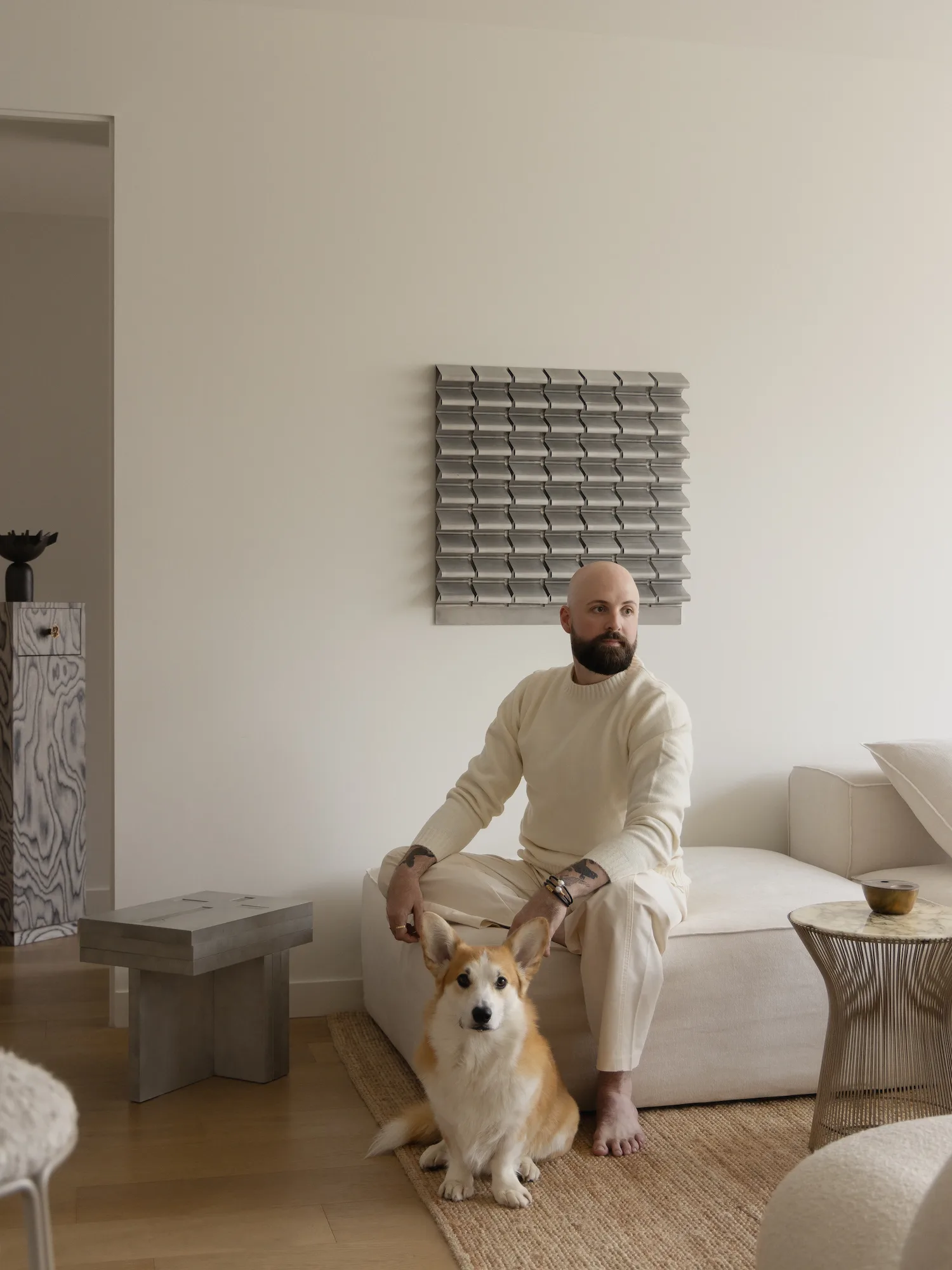
Atop an Armadillo Bramble jute rug sits a Gurtler-designed sofa, beneath an Alexander Brown metallic artwork that speaks to an aluminium, Bruda Studia Lampa side table. In the entryway a ceramic Theodosius Ng sculpture rest on a Karin Bochnik plinth.

A Nunzio Miano artwork and Studio Henry Wilson Scoop wall light hang above a gifted checked vase. The dining space features a Normann Copenhagen Knott chair and a powder-coated steel USM Haller sideboard. On top, a print by Herb Ritts, acquired while visiting New York, accompanies a Timothy Kaye artwork, Christopher Boots Prometheus light and Lost Profile Studio Carapace candle reflector.
Documented homes of creative minds—like Carla Sozzani, gallerist and concept store pioneer—depict a treasure trove element to curation. This instinct is evident in Gurtler’s objects; books, artworks, sculptures and tokens are personal storytellers, exuding the enthusiasm of their collector, with an emphasis on spotlighting local designers including Oliver Wilcox, Volker Haug and Christopher Boots shine. “I truly believe we have some of the most incredible artisans in Australia. When someone asks about a piece, I love being able to talk about the person who made it. It’s a richer experience.”
His third personal redesign, Gurtler reflects, “Each time I do this, I learn more about how people interact with space and how profoundly design can shape the way someone feels at home.” If homes are telling of their owners, Gurtler’s reveals an embrace of the wabi sabi, a wholehearted appreciation for designers, and a capacity to glean inspiration from diverse, worldly niches—qualities of authorship that go beyond simply owning a home.


A King Living bed complements James Dunlop Antipodes curtains under a Renaissance-era painting, aluminium-framed by Lost Profile Gallery, alongside Volker Haug Anton lamps.

The bathroom features Rich Brilliant Willing Crisp sconce lights, and bespoke cabinetry.