In central Milan, a 1920s apartment is restored by lifting its original cement tiles, re-laying them inside a new layout and conceding only one room—a saturated pink wardrobe—to a different century.
The tiles came up first, then went back down. Original to the 1922 building, they had to be lifted to make room for a more open plan, and were re-laid in their initial positions, room by room, each pattern preserved: floral in the living room, geometric in the dining area, star-shaped in the bedroom. A slim black metal trim now frames each room and hides the services beneath. Most of the apartment was built around this single act of restitution.
The project is the work of Milan-based designer Thomas Zangaro, whose multidisciplinary practice spans interiors, exhibition and product design. Here he was working on the smallest of his typical scales: a corridor-plan apartment in a 1922 palazzo, and an art collector’s brief that asked for a more open layout without losing what was original to the building.
“I want to respect the architectural box that hosts us,” Zangaro says. “When parts of that box are no longer there, you can rebuild them—it just takes more research.” The apartment is hung accordingly. A Paul Bik art panel sits above the living room fireplace, framed by built-in shelving; ceramic and stone sculptures are placed room by room. The walls are kept calm and warm—cream, sand, putty—to let the artworks and the original tiles do the visual work.

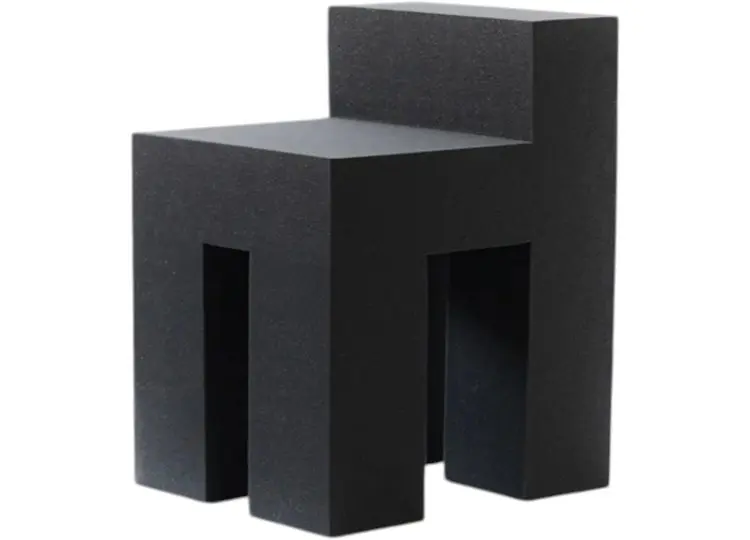
The Atollo table and ML1.2 chairs by Massimiliano Locatelli Editions.

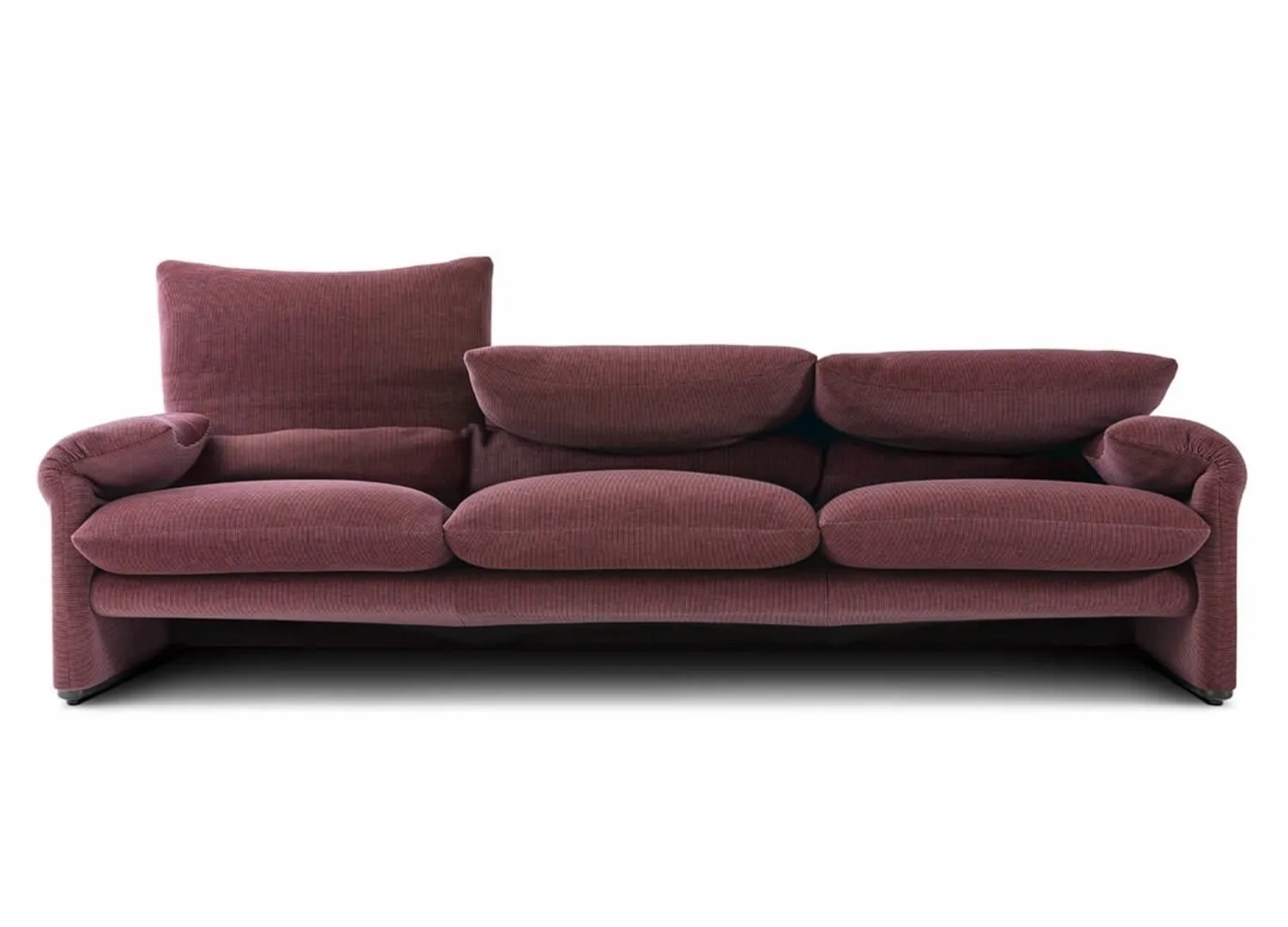
The original cement tiles in the living room have been lifted, restored and re-laid in their initial positions, accommodating a new layout that joins what were previously two separate rooms. A Maralunga sofa by Vico Magistretti for Cassina sits beneath an artwork by Paul Bik from his Extruded Canvas series.

The bathroom takes its references slightly outside the apartment, looking instead to the public swimming pools and gymnasiums of the same period: rounded edges, fixed pendant lamps, cream wall tiles broken by accent tones in deeper hues. The basin is custom-designed, with a grey-veined marble top set above an orange lacquered cabinet—assembled, like much of the joinery, from three different suppliers. It is a working method Zangaro traces back to his training as a product designer rather than as an architect. “It takes three or four sources to arrive at this single piece,” he says. “I would rather do that than buy something off a catalogue that is almost right.”
The kitchen, by contrast, has been pared back to a long counter with minimal storage. The client rarely cooks, and the studio used the freed wall to give visual weight back to the tiles.
Then there is the walk-in wardrobe. At the client’s request, every surface—walls, shelves, drawers, the inside of the door—has been painted a saturated pink. It is the only room in the apartment that does not refer to the 1920s, and the only one that breaks the project’s archaeological discipline.
“If a home has a strong classical structure, I like to break it with something from a different world,” Zangaro says. “It works the other way, too. If the structure is more contemporary, the rupture comes through vintage pieces.”
The pink room is that rupture, concentrated and contained. The rest of the apartment reads as Zangaro built it: a patient restitution, with a single deliberate departure.
This Milanese apartment by Thomas Zangaro was originally featured as part of our 2026 Milan issue of est magazine, ‘Italy by Invitation’.

The kitchen has been pared back to a single counter with minimal storage, as the client rarely cooks. Cream cabinetry frames a veined marble splashback and a black tap.

Designer Thomas Zangaro in the Milan apartment.

The bathroom references the public swimming pools and gymnasiums of the 1920s. A grey-veined marble vanity sits above an orange lacquered cabinet, paired with cream square wall tiles, black tapware and sculptural glass wall sconces. Ceramic vases by Ceramiche Milesi complete the composition.

Bed linen and cushions are made up in fabrics by Schumacher. At the client’s request, every surface in the walk-in wardrobe has been painted a saturated pink.