Hand-crafted glazed ceramic acid-yellow tiles contrast with the terracotta floor tiles in the kitchen and are illuminated by Toscot hanging pendants.
A 19th-century ruin and a stone barn in Menorca are reenvisioned into a summer residence, capturing the adventurous travelling spirit of its owners, and fused with local savoir-faire.
Atelier du Pont collaborated with local architect ARU Arquitectura to revive a 19th-century ruin with an adjoining stone barn on the Balearic Island of Menorca and cohesively reframed them into an Arcadian farmhouse. Steeped within 76 hectares of Menorcan countryside, the summer residence sprawls over 300 square metres and includes four bedrooms, each with a terrace view, a hammam, an entertainer’s kitchen, and a pool. Atelier du Pont architect and co-founder Anne-Cécile Comar says the home was designed as a meeting point for a mother and daughter. “The owners gave us carte blanche to imagine the interior concept and the different atmospheres in keeping with the spirit of the place,” Comar explains.
With design codes already prescribed by the building’s historic architectural details, symbolic of the region’s island homes, Atelier du Pont intended to preserve and continue this design language. Comar says archetypical cues were found through the curve of an arch, the rough appearance of a facade, the views over the wilderness, and the systematic presence of local stone. “We tried to imagine a place that blends raw materials with a more contemporary, unexpected and invigorating look,” architect and co-founder Philippe Croisier adds.
The living room features a Gavila coffee table, a pair of armchairs by Audoux-Minet, a chair by Yellow Nose Studio, a terracotta vase by Louise Roe from Tabouret, Menorca, a Can Sab red vase, a Toscot wall lamp, and Gouaches on paper by Jacques Soisson.
The living room pivot windows made from untreated lroko wood by Gavila, provide scenic views of the countryside estate.
Heritage expressions embraced as sinuous forms continue to be iterated throughout the residence, employed as one of the main details that unite the two buildings. These soft gestures are found through the doorways, walls, sunken flooring and masonry benches. “The arched windows, made of untreated iroko wood, with off-centre pivots ensure that the light is not cut off and that the view outside is as unobstructed as possible,” Comar adds.
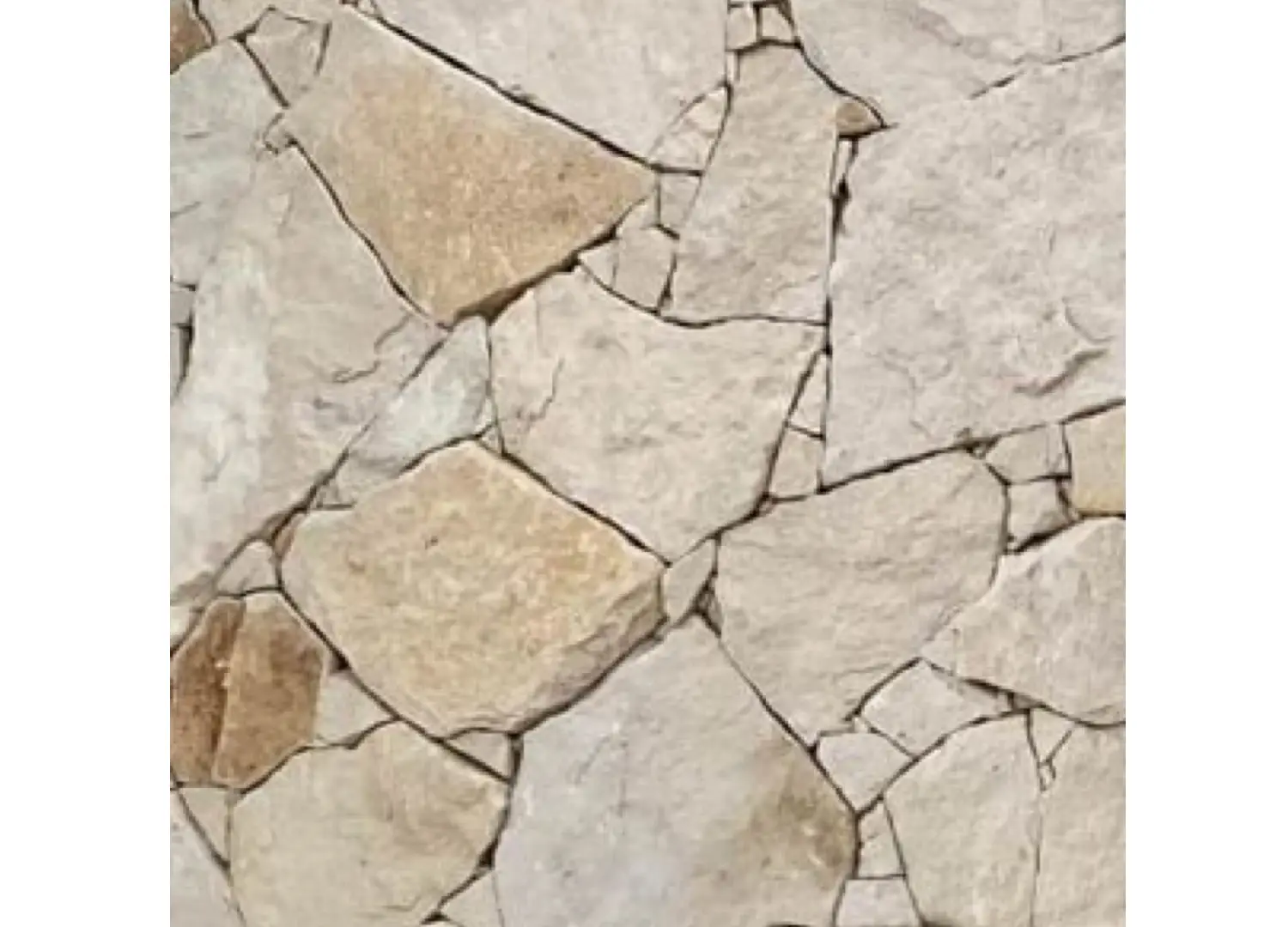
Cultivating the regional identity within the home, various textures, wall finishes, and renderings reflect the local Menorcan savoir-faire. Traditional materials are found through the abundant use of stone in the form of dry, cut, and sculpted, as well as lime coatings and glazed ceramic terracotta tiles. Inspired by a neighbouring room with an old yellow ceiling, the kitchen has been dressed in a contemporised version of this colour. Making an impactful statement, 3,000 hand-crafted acid-yellow tiles are worked with the traditional colours and materials in the space.
Terracotta tiles from New Terracotta are in the bathroom, which features a Dorian mirror, Studio Ore pipework, and a D’aigo Mallorca washbowl. Contain wall lights illuminate the space.
The bedroom is dressed in a custom headboard tapestry by Cañadas Murúa, an Elitis cushion, a Madura bedspread, and a linen comforter cover by La Redoute. A Dorian Menorca chair is featured beside the bed, along with electrical equipment by Legrand and a terracotta tile wall lamp.
Throughout the residence, the architects have commissioned local craftsmen and artisans to produce custom-designed pieces, such as woven headboards by Mariona Cañadas and Pedro Murùa. Other notable pieces include bespoke bedside and side tables made with terracotta and rope, stone sinks, and a concrete and lime bathtub.
Estancia San José embodies the adventurous spirit of its owners. While they have encountered various influences through their travels, Atelier du Pont conveys these singularly through this Menorcan residence.
The outdoor patio features Roger Capron vintage stools and chairs from Can Sab, Menorca that surround the coffee table. In the background a country table and bench from Alcolea & Krauss is featured.
Simple tiles are inlaid at an angle to the exterior walls and perform as gutters conducting water from the roof to the ground.