The lighting throughout Aman Kyoto was designed to reflect traditional crafts, such as the Japanese Kyoto umbrella, made from bamboo and paper.
Capturing the essence of Japan’s ancient imperial capital, Aman Kyoto transports you to a secret garden where nature, history and architecture beautifully coalesce.
As the latest addition to Aman Resorts in Japan, Aman Kyoto opened just under five years ago, following Aman Tokyo and Amanemu. Designed by Australian-Singapore firm Kerry Hill Architects, it offers a modern interpretation of the traditional Japanese Ryokan inn and onsen, featuring 24 guest rooms, two two-bedroom villas, and dedicated living, dining and spa pavilions.
Located in Kyoto’s Takagamine district, the resort is within walking distance of Kinkaku-ji Temple (Golden Pavilion), one of Kyoto’s 17 Unesco World Heritage sites. Embedded in a historic hidden garden of moss-covered footpaths, forested slopes, and streams, Aman Kyoto feels remarkably secluded while deeply connected to the city’s past, providing an authentic and immersive design stay.

The guest rooms are designed to be intimate in scale with the considered detailing inherent in Japanese architecture and interiors. Timber screens welcome filtered light and connection to the ethereal surroundings.
Upon entering Aman Kyoto, you are greeted by a Tamba Himeji megalith stone – a prelude to the ‘once-forgotten secret garden’ that inspired the resort’s design. The property spans 80 acres, with 72 acres of permanent forest and eight acres of garden at the foot of the symbolic Mountain of Hidari Daimonji.
The garden was previously owned by a respected obi collector, who dedicated decades to its care with plans for a textile museum. Although this vision was not realised, Aman Kyoto became its custodian and committed to preservation. The resort worked closely with renowned landscape architect Professor Shimoda to restore the garden and ‘recreate the lost landscape of the Edo period’. “My aim with the garden at Aman Kyoto was to connect people to nature in the same way that gardens were traditionally connected to the spiritual world,” Professor Shimoda explains.
Manicured platforms are bordered by a small stream on one side and a forested hill on the other, with winding pathways, multiple viewpoints, and at least seven private outdoor dining spots. The resort’s central formal lawn features large granite boulders selected by the former owner as sculptures, complemented by statues from across Japan. This self-sustaining garden showcases only Indigenous plants and trees, including rare endemic species that change colour with the seasons.

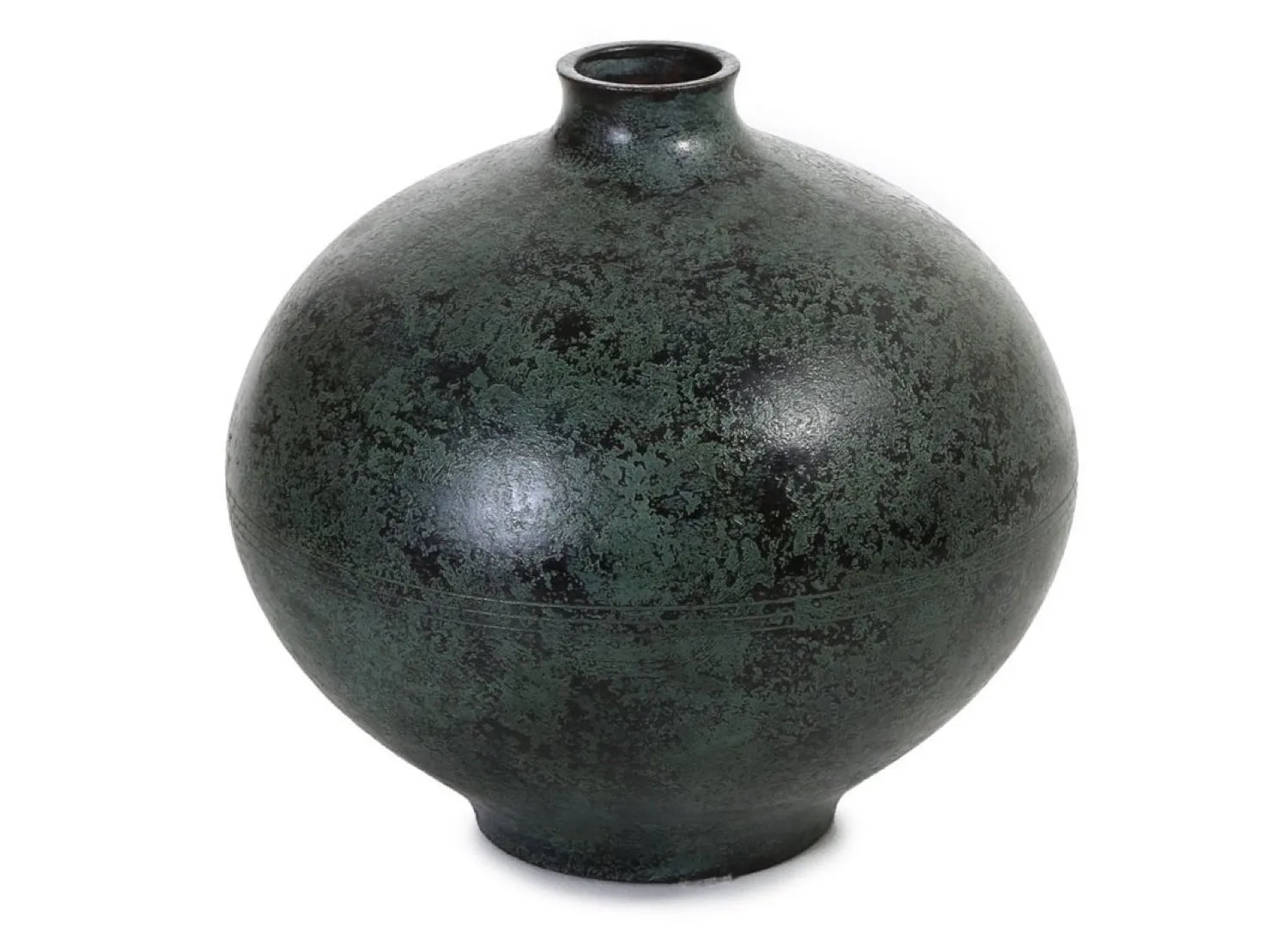
Artworks, vases and antiques have been carefully selected to reflect Japanese creative values and traditions. ‘no title’ hanging scroll with a painting in the guest room by Kyoto artist Sakai Yuji. The scroll illustrates the fog rising above Takagamine Mountain in Kyoto and evokes the changing of the four seasons. The carbon, hi-fired, unglazed vase is by Tereda Teppei and symbolises Seto pottery from the Middle Ages.

The spacious guest rooms feature Tatami mat floors, wooden panels concealing technology, and intuitive architectural lighting and blind systems.

Kerry Hill Architects designed custom pieces for the guest rooms and villas, such as the curved black chairs and ofuro bathtubs made from hinoki cypress wood native to central Japan.

Kerry Hill Architects designed the stand-alone pavilions as a contemporary version of a traditional Japanese Ryokan inn. The architecture makes use of the garden’s most defining features, following the guiding Japanese design philosophy that keeping things simple means being all about the details.
The garden’s layout informed the placement of the resort’s pavilions. Kerry Hill Architects designed these spaces with distinct functions: arrival, living, dining, and spa. Four guest pavilions house 24 rooms with views of the garden or stream, while two two-bedroom pavilions overlook the forest canopy.
The minimalist pavilions incorporate timber screens, raised seam metal roof sheeting, stained timber, and Tamo Japanese Ash panelling, evoking traditional Japanese architecture. Greenery enters the villas and guest rooms through floor-to-ceiling windows, enhanced by the pared-down interior palette. The spacious interiors feature Tatami mat floors, wooden panels concealing technology, and intuitive architectural lighting and blind systems.

Garden stairways and pathways guide guests to elevated platforms, flanked by yama momiji maples and avenues of kitayama-sugi (Japanese cedar).
Each suite includes a tokonoma—a raised area in traditional Japanese homes for displaying art and special objects—with individually selected artworks, vases, and antiques. All furniture, including the traditional Japanese lanterns, is custom-designed exclusively for Aman Kyoto, featuring pieces by Kerry Hill Architects, such as the curved black chairs and ofuro bathtubs made from hinoki cypress wood native to central Japan.
The Living Pavilion is lined with handmade rakuya panels and 680 ceramic tiles made by local Kyoto artist Shigeo Yoshimura. Opening onto the ornamental stone zen garden, the space is shaped around a fireplace at its core and offers afternoon tea and home-cooked Kyoto obanzai-style cuisine throughout the day. The Dining Pavilion, ‘Taka-an’, is Aman Kyoto’s signature restaurant. Under the guidance of executive chef Shinichiro Takagi, it celebrates local produce and culinary heritage with seasonal, hand-picked ingredients.
Just as the entire resort, the Aman Spa accentuates the healing benefits of nature. Beyond the three Kyoto-style treatment suites, the indoor and outdoor traditional onsen bathing facilities are enveloped by the garden, using natural spring water that flows nearby. Guests can also enjoy guided meditation, yoga, and forest bathing—‘Shinrin-yoku’, which means taking in the forest atmosphere.
Aman Kyoto is a testament to Kerry Hill Architects’ understanding of its environmentally and culturally significant site and the Aman Resorts philosophy. The resort invites guests to contemplate, wander, and find peace in nature, transcending any preconceived notions of wellness and retreat.
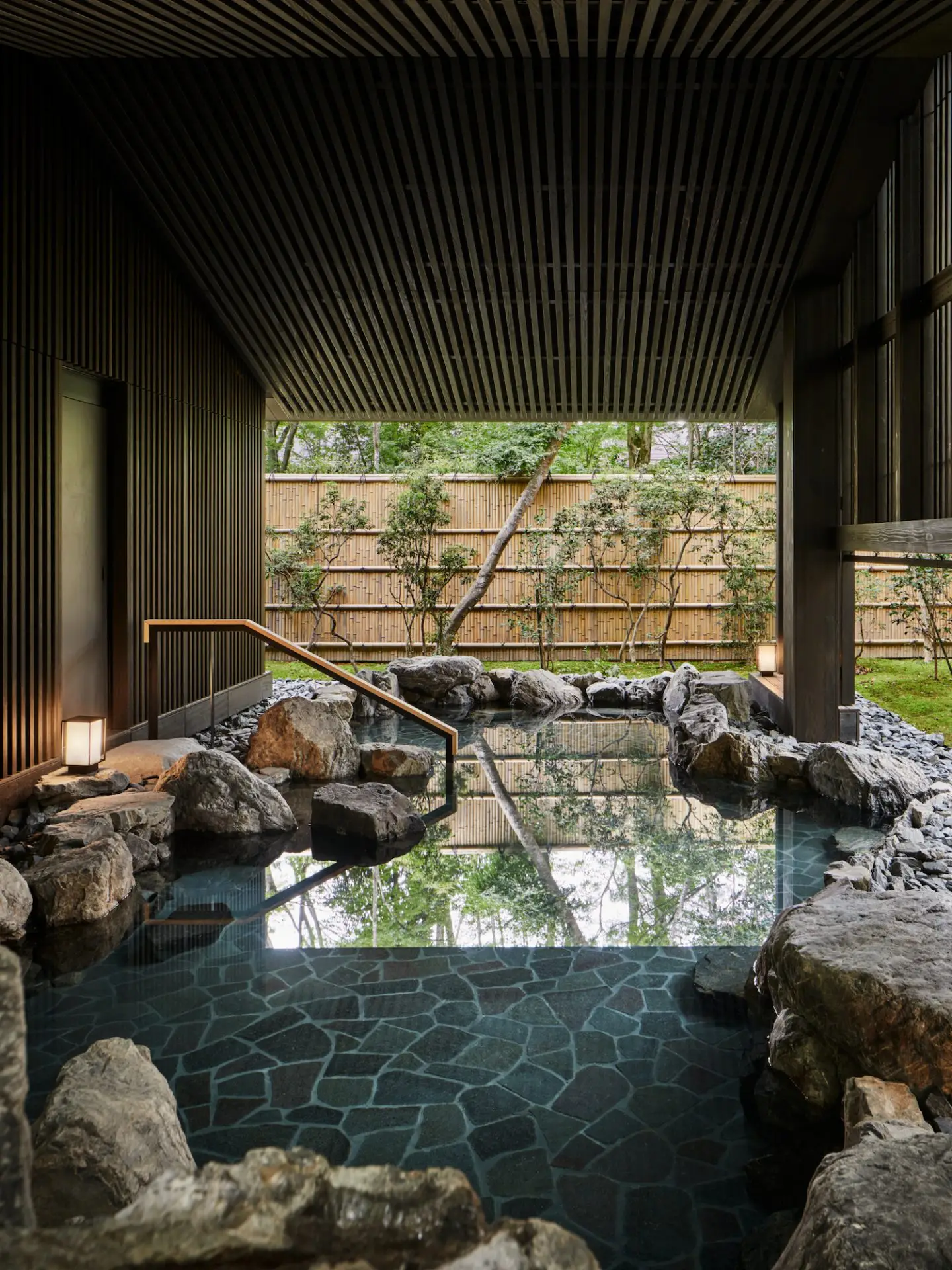
Above: the outdoor onsen at Aman Spa, using natural spring water that flows nearby.

The Aman Spa features three Kyoto-style treatment suites, and every treatment begins with a foot ritual dating back to 16th-century Ryokan inns.

The Dining Pavilion Taka-an celebrates local produce and culinary heritage with seasonal, hand-picked ingredients.

The Living Pavilion opens onto the ornamental stone zen garden and offers afternoon tea and home-cooked Kyoto obanzai-style cuisine throughout the day.

The garden was previously owned by one of Japan’s most respected obi collectors, who tended to it over several decades. He had set out to create a textile museum within the garden, and while this wasn’t realised, Aman Kyoto became the garden’s next custodian, dedicated to its preservation.

Manicured platforms are bordered by a small stream on one side and a forested hill on the other, with winding pathways, multiple viewpoints, and at least seven private outdoor dining spots.