Supporting partners Armadillo, Space Furniture and Penfolds.
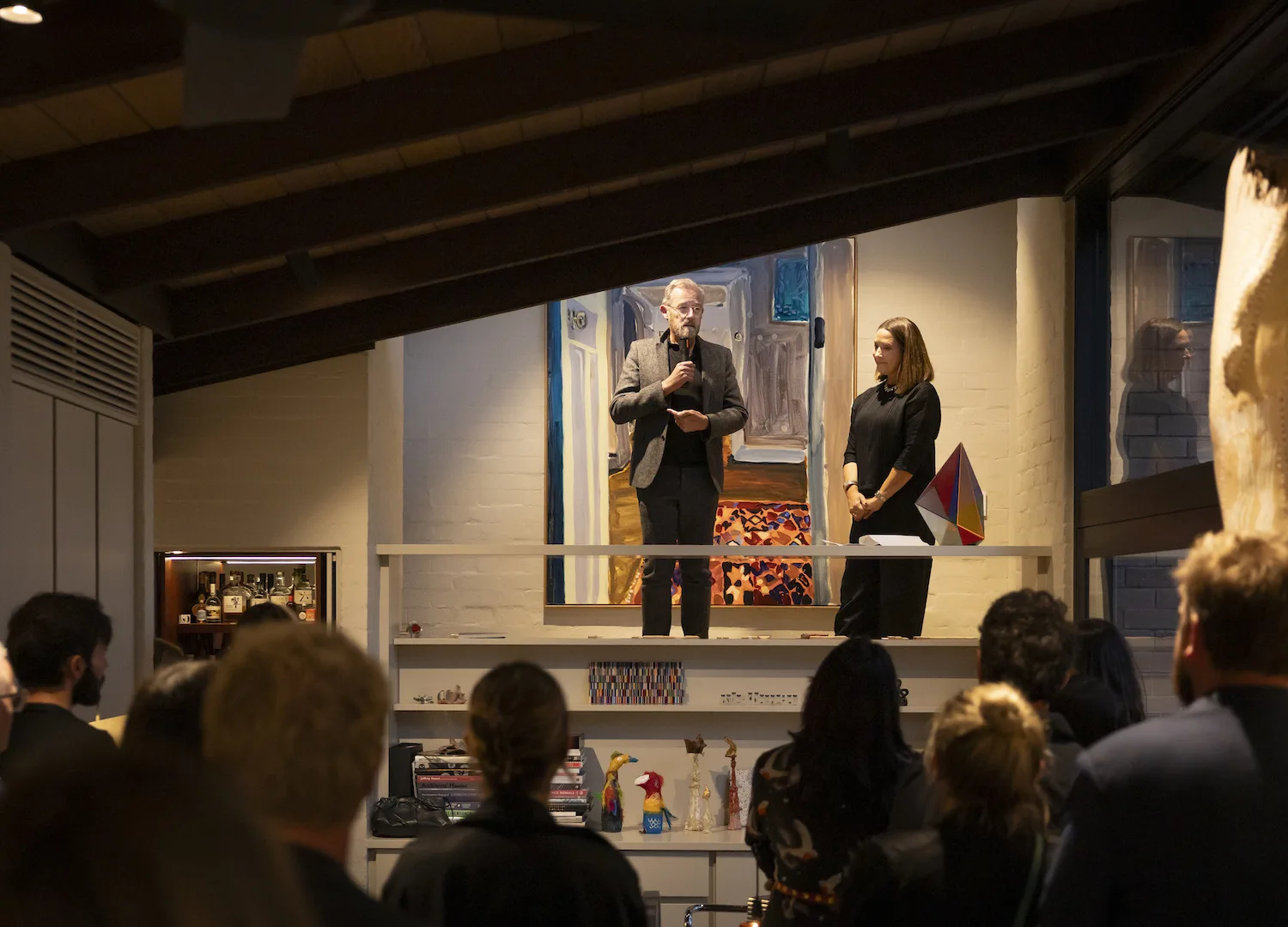
The event was held at Gunn Ridge House, the seminal Melbourne home by renowned Australian architect Graeme Gunn, renewed by esteemed 10 honourees Kennedy Nolan. Not only is the house an enduring example of Australian modernism, it was also featured in est living’s first-ever print edition, Design Instinct, making it a fitting setting for this year’s celebration.
“It’s really exciting to celebrate our first print edition—issue 60—after fifteen years of digital publishing,” editor Sophie Lewis says. “These awards were the impetus for printing to create a tangible record of this highly selective recognition,” she adds.
“To gather in a home by one of our esteemed 10, and one that also appears in Issue 60, makes this moment feel especially resonant. This space really makes you appreciate the meaning and humanity that comes from design intertwined with daily life.”
This year’s Australian architects and designers include Kennedy Nolan, Decus, Nielsen Jenkins, Flack Studio, Lovell Burton, Arent&Pyke, Jolson, Atelier Alwill, Room 11 Architects and Billy Maynard, as well as multidisciplinary designers Olivia Bossy, Fiona Lynch and Don Cameron. The multidisciplinary selection also includes globally recognised creatives Luke Edward Hall, Studioutte, REdDUO, Charlotte Taylor, Corpus Studio, Studio Ebur and OEO Studio, whose work reflects “the value of creative collision, embracing collaboration, noticing what others overlook, and prioritising human connection in every project.”
House Editions by Claudia Lau was presented to the esteemed 10; a new series of bespoke architectural objects. Based in Jingdezhen, the practice expands porcelain into architecture—where volatile glazes and kiln atmospheres shape surfaces that balance precision with variation.